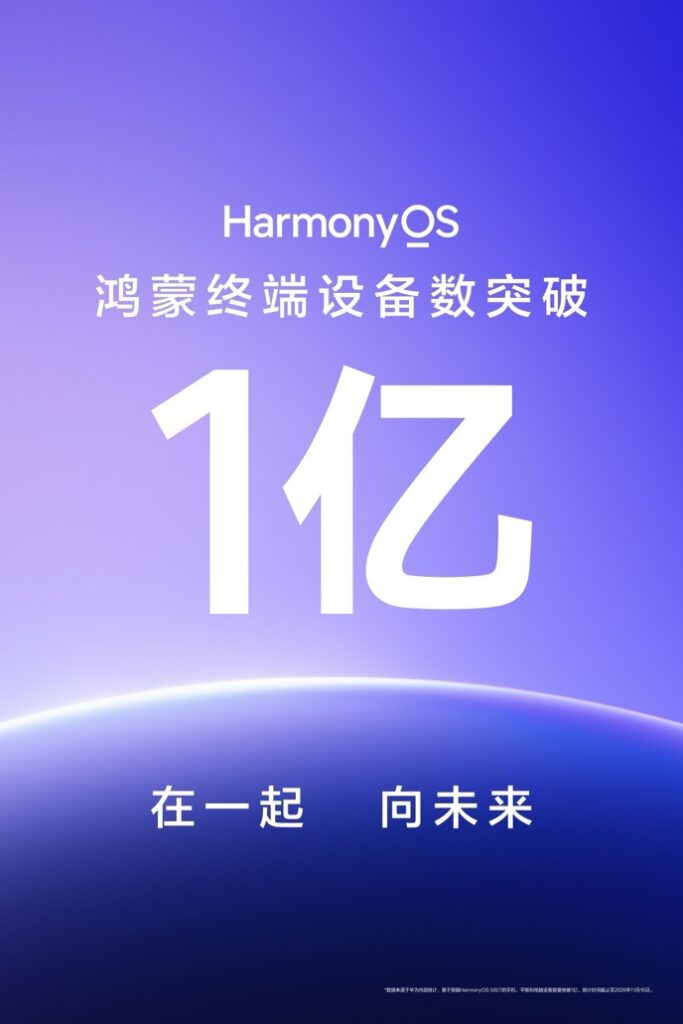
Huawei said in November 2026 that phones, tablets and computers running HarmonyOS 5, 6 or 7 have passed 100 million devices. The company also said more than 460,000 apps and services are available, and that registered developers exceed 12 million.
Huawei described the figure as the HarmonyOS ecosystem crossing a scale threshold and entering wider everyday and industry use. It credited partners and developers with bringing Chinese internet applications, user services and commercial practice onto HarmonyOS.
Open-source base
Huawei said HarmonyOS is built on open-source OpenHarmony. It reported that OpenHarmony has more than 14,000 contributors and more than 120 industry distributions, with continued work in power, water services and industrial settings. According to the company, industry partners are using that open-source base for joint software and hardware development tied to sector digitalization.
Huawei said the project has given China’s basic-software industry experience in development, ecosystem adaptation and large-scale deployment, and has created room for other companies to work on underlying technology and differentiated products. Those points are the company’s characterization of the effort, not an independent assessment.
Features partners are using
Huawei said the larger device base gives developers a broader user market, while open system capabilities support new apps and experiences. It pointed to cross-device collaboration, system-level AI, Live Windows, and hardware forms including wide foldables, wide bar-style phones and foldable computers.
The company said partners have contributed more than 160 capabilities, called by more than 1,600 apps, and that use of the related functions rose 90-fold within one year. It also said more than 58,000 partners have connected to more than 120 features, including tap-to-share and Live Windows.
Scenarios Huawei cited include local life services, travel abroad, retail, office work, telephoto and macro live streaming, ride-hailing progress shared through a Live Window, 3D restaurant views and help with language barriers. It said AI-assisted development tools are being used to speed development and testing. The company framed this as partners combining HarmonyOS capabilities with their own services, and as room for organizations of different sizes to try new product forms and business opportunities.
What Huawei says HarmonyOS 7 changes for users
Huawei said the value of the device base shows up in daily use, and that games, office tools and travel services are being updated as the app ecosystem grows.
On HarmonyOS 7, the company described a more immersive spatial look, with light-and-shadow interaction and 3D spatial wallpapers. It said the Ark Engine, combined with a performance large model, is meant to improve smoothness and efficiency, and that added storage capacity frees more usable space. It described Xinghe interconnection as making cross-device sharing and task handoff easier, and Star Shield security as using AI anti-fraud and privacy protection for more active safeguarding. These are product claims from Huawei.
Assistant, sharing and accessibility
For what it calls the agent era, Huawei said system-level AI is meant to make interaction more natural. It said the Xiaoyi assistant can call more than 2,100 system capabilities and more than 200 system-level data items, and can connect to more than 500 partner-selected skills to help plan trips, manage information and complete multi-step tasks.
Huawei said a phone and a computer can share images and documents by tapping, and that Live Windows can gather progress for services such as food delivery and travel. It also cited accessibility features, including “Xiaoyi Sees the World” and accessible calling, for users with visual or hearing impairments.
Huawei said it will keep investing in technology and ecosystem work with developers and industry partners, including fuller app coverage, agent features, system updates and multi-device use. That is a stated plan, not a completed result.