Originally reported November 11, 2026.
Cross-cloud data-transfer charges can be shaped long before they appear on an invoice. In an InfoQ article, the author argues that teams should assess where services run, how often they communicate, and how much data they exchange during system design—not only after deployment.
The article identifies four patterns that can drive avoidable transfers: synchronous calls between clouds, real-time transfers when delayed data would suffice, moving raw data instead of processing it near its source, and broadcasting the same update separately to multiple destinations. Not every cross-cloud call can be deferred: payment authorization or an immediate fraud decision may need a prompt response. Reporting data that is only used hourly may not.
What the checkout experiment found
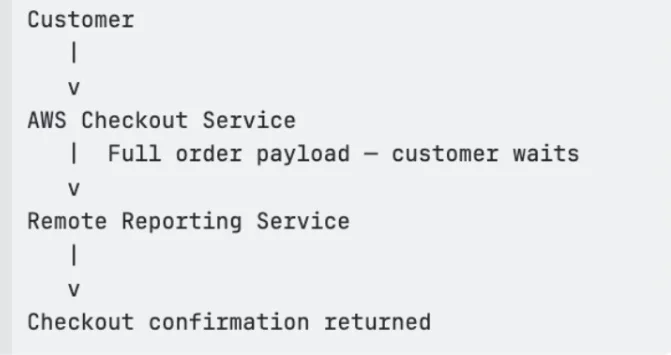
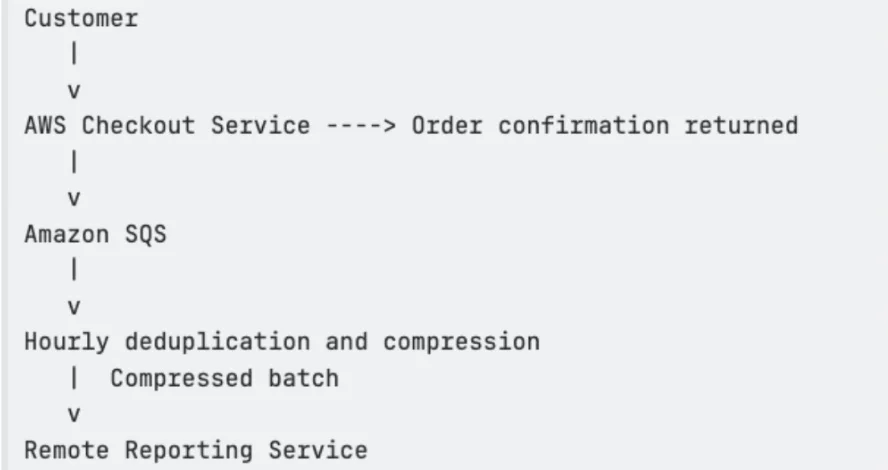
The author describes a controlled experiment using 100,000 synthetic completed orders. An AWS-hosted checkout service sent order data to a reporting platform on another cloud. The experiment compared sending each full order synchronously, queueing and transferring deduplicated, compressed records hourly, and calculating dashboard metrics near the source before transferring only the results. All three approaches met the experiment’s hourly reporting requirement.
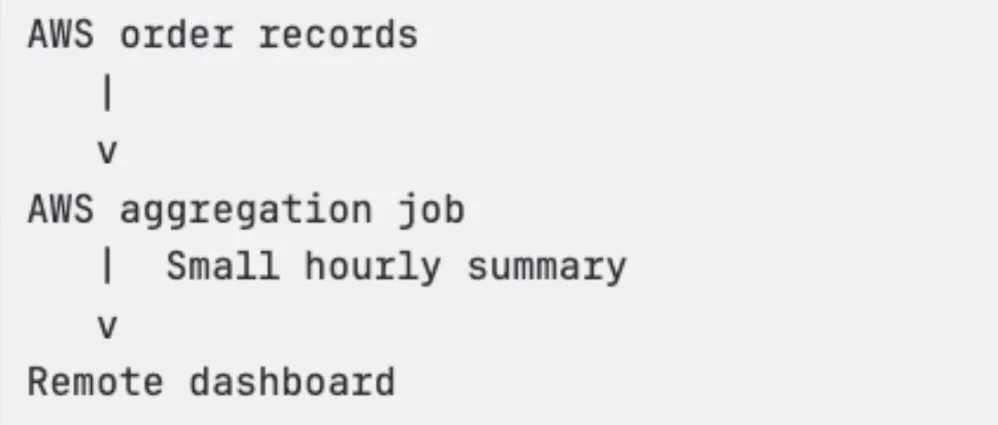
In the reported results, batching cut transferred data by 60% and reduced checkout’s 95th-percentile response time from 420 milliseconds to 145 milliseconds. Near-source processing cut transferred data by 95%. At the article’s illustrative rate of $0.135 per GB—including $0.09 for transfer and $0.045 for gateway processing—the projected monthly network cost for a workload of 100 million completed orders fell from $3,375 with synchronous transfer to $168.75 with near-source processing. Those figures are an extrapolation from the experiment, not a reported production bill.
Making costs visible before deployment
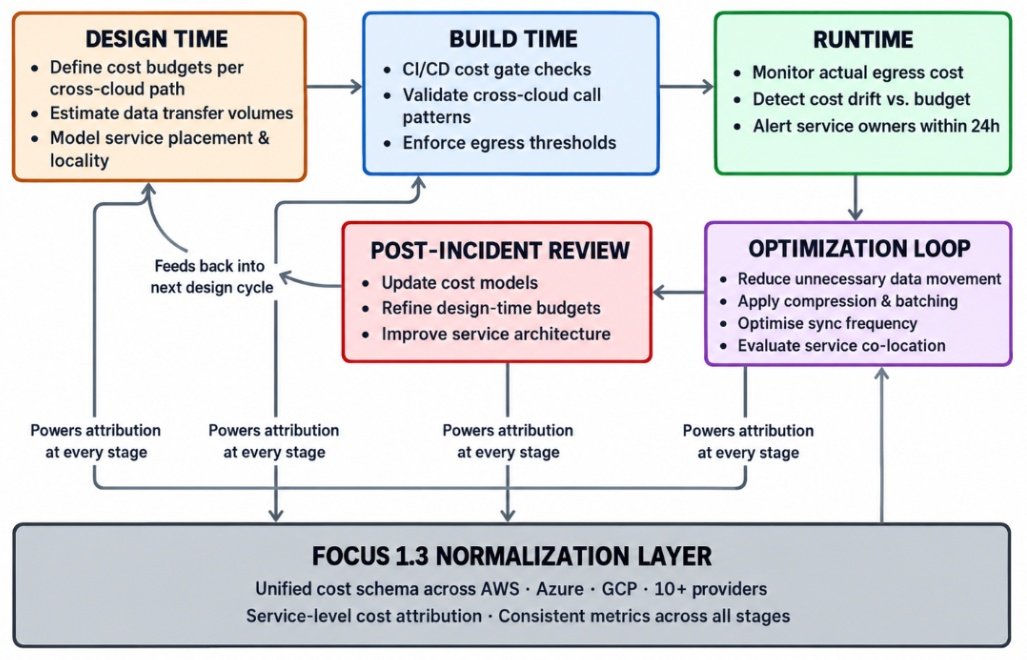
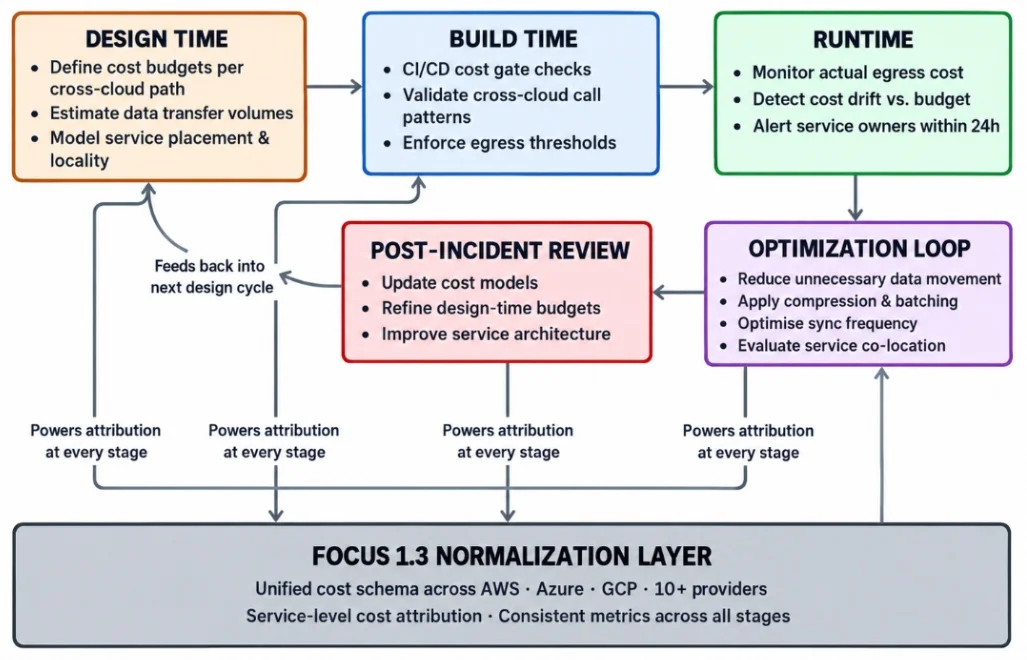
The article proposes estimating cross-cloud traffic from deployment location, request volume and payload size, then flagging substantial changes for architecture review in CI/CD. It also recommends connecting normalized billing data with service ownership, distributed traces and network-flow logs: billing records alone cannot show which request or retry caused a charge.
There is a version discrepancy in the source: its prose names FOCUS 1.4 as the billing-data normalization layer, while its lifecycle diagrams label that layer FOCUS 1.3. The article does not resolve the difference. Its broader point is that a normalized bill provides a basis for comparison, but does not replace service-level attribution or observability.
For teams evaluating a multi-cloud design, the practical question is whether each dataset must cross a provider boundary in that form and at that frequency. The answer depends on the workload’s latency, freshness and audit requirements—not just the advertised per-gigabyte rate.
Source: infoq.cn (originally published 2026-11-11 16:49 UTC+8)