Originally reported by InfoQ on November 16, 2026.
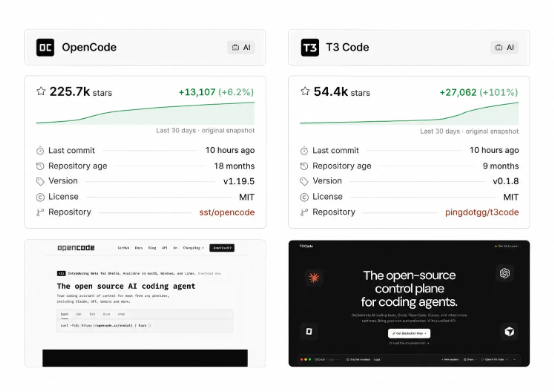
T3 Code’s Orchestrator V2 had reached a stable release after roughly six months of work, according to InfoQ’s report. The open-source coding interface brings multiple models and agent harnesses into one workflow, rather than requiring developers to work in each provider’s app separately.
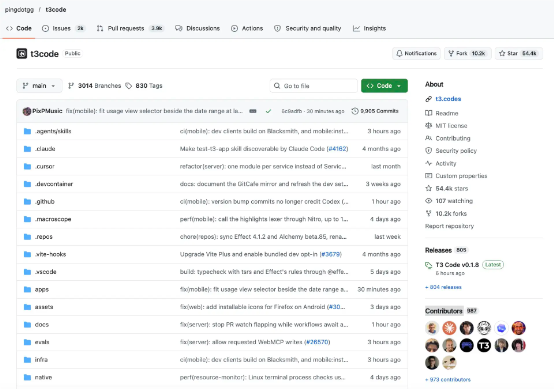
The report said T3 Code had more than 700,000 users. At the time of reporting, its GitHub project had 987 contributors, 54,400 stars and 10,200 forks, and was licensed under MIT. Those figures describe the project as reported in November 2026, not its current status.
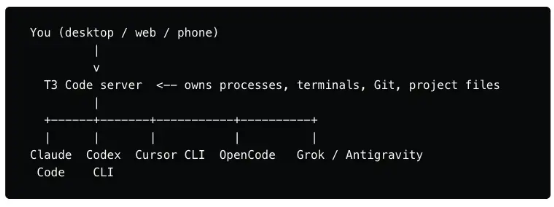
In an interview summarized by InfoQ, T3 Code author Theo Browne explained that the tool runs a WebSocket server connected to coding harnesses on a computer. Desktop, web and mobile clients can then connect to it. Browne described using Tailscale to reach threads running on another machine, allowing work to continue without keeping the local laptop occupied. He said users must provide their own model subscriptions; T3 Code does not sell the AI service itself.
InfoQ described support for Codex, Claude, Cursor, Grok, OpenCode, Antigravity, Muse Code and Pi, as well as additional ACP-compatible harnesses through the ACP Registry or manual configuration. Its assessment that T3 Code is particularly strong for multi-model and remote-environment workflows is an evaluation in the report, not a measured comparison established by the interview.
The discussion also addressed what coding agents need from a software project. Browne argued that type safety, tests, CI checks and preview environments become more valuable when agents make changes with limited knowledge of a codebase: they give the agent ways to detect mistakes before a person reviews or merges its work. He described using natural-language review criteria alongside conventional checks, while acknowledging that agent-based reviews are not perfect.
For teams considering similar workflows, the interview’s practical point is less about replacing engineering safeguards than making them accessible to agents. Browne cautioned against using AI to avoid learning a task: developers should understand how the work succeeds and fails before deciding which parts to automate.
Source: infoq.cn (originally published 2026-11-16 14:44 UTC+8)