Originally reported by InfoQ on November 16, 2026.
DeepSeek announced on November 13 that it was adding capabilities used in its app and website to its API. Developers can now declare hosted web-search and webpage-reading tools in a model request, rather than executing those steps in their own application. DeepSeek also offers file input and separate Search, Fetch, OCR, speech-recognition and text-to-speech interfaces.
With hosted search enabled, the model decides whether to search and can return answers with source citations. DeepSeek says its thinking mode can make roughly 20 tool calls—including searches, opening pages and finding content within a page—while working through a request. Developers still need to display the returned citations and tool records correctly and pass relevant content blocks back in subsequent turns.
File input follows a separate process: developers upload a PDF, Word document, PowerPoint file or image through the Files API, wait for parsing and then add the returned file ID to a conversation. DeepSeek offers text-only and mixed text-and-image parsing, but says the latter may not extract every chart; extracted images also consume input tokens.
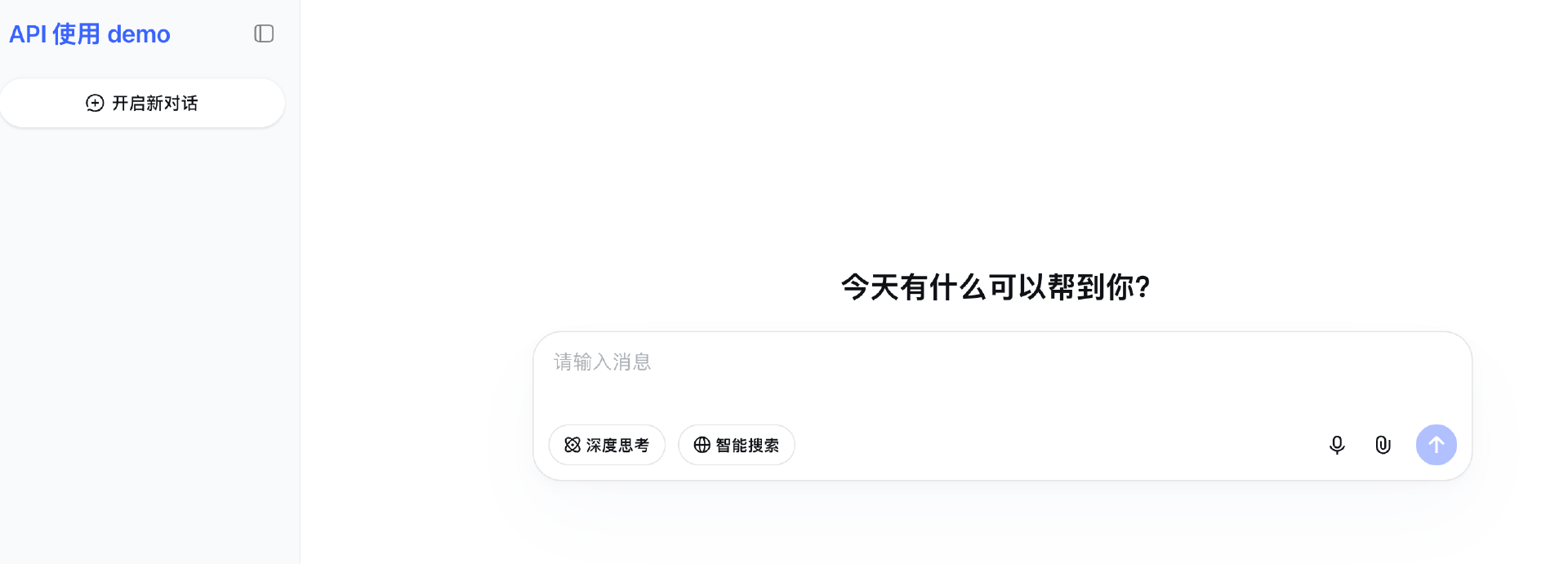
This release builds on Search and Fetch APIs that DeepSeek had already opened on October 17. Its main change is to move more tool orchestration into model conversations. DeepSeek says the new application-level features support its Messages, Responses and Chat Completions interfaces, and identifies V4.1-Flash as the model currently supporting them. It has also published a chat-demo project showing search, file input and other features.
The convenience comes with limits. According to DeepSeek’s documentation, developers cannot use tool_choice to force a hosted search or webpage-reading call; doing so returns a 400 error. Hosted search also lacks domain allowlists and blocklists. Under certain hosted-tool or safety settings, some supplied generation and tool-control parameters are ignored in favor of server-side settings. Applications that must control sources or execution may therefore need the separate Search and Fetch interfaces or their own tool chain.
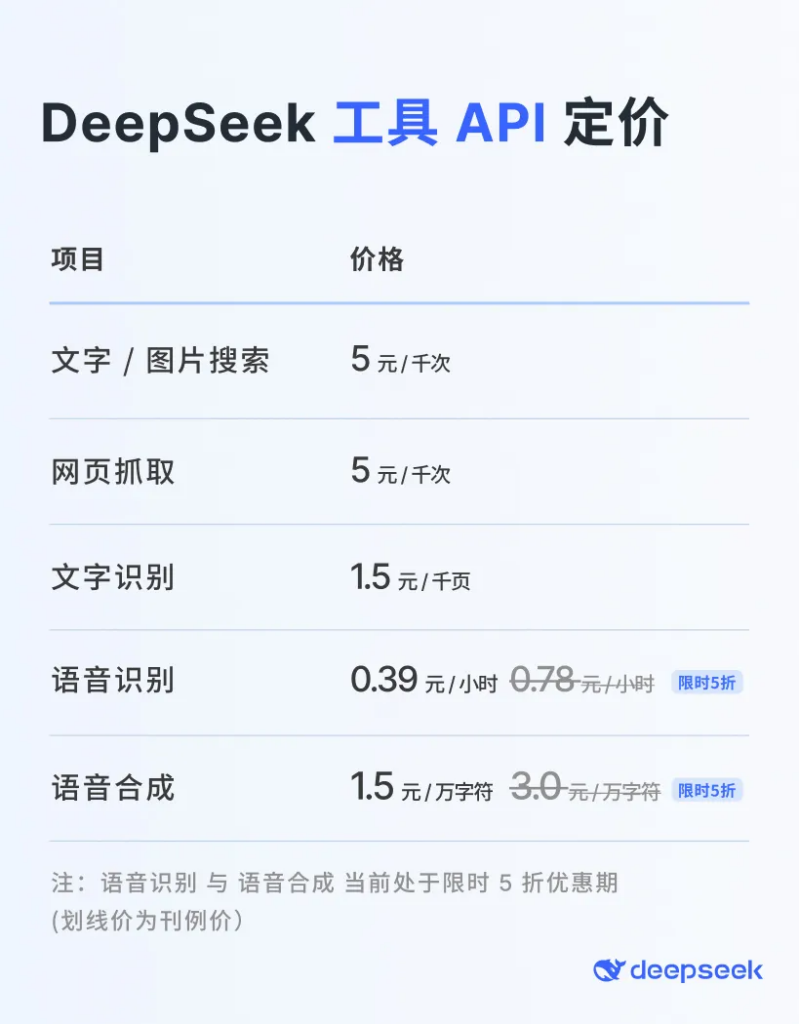
DeepSeek says expanded capabilities incur tool-call charges in addition to token charges. A user comparison cited by InfoQ put its web-search price at 5 yuan per 1,000 calls, versus $10 per 1,000 for comparable OpenAI and Anthropic tools; those figures were reported as a user’s comparison, not an independently verified like-for-like cost assessment.
Source: infoq.cn (originally published 2026-11-16 14:38 UTC+8)