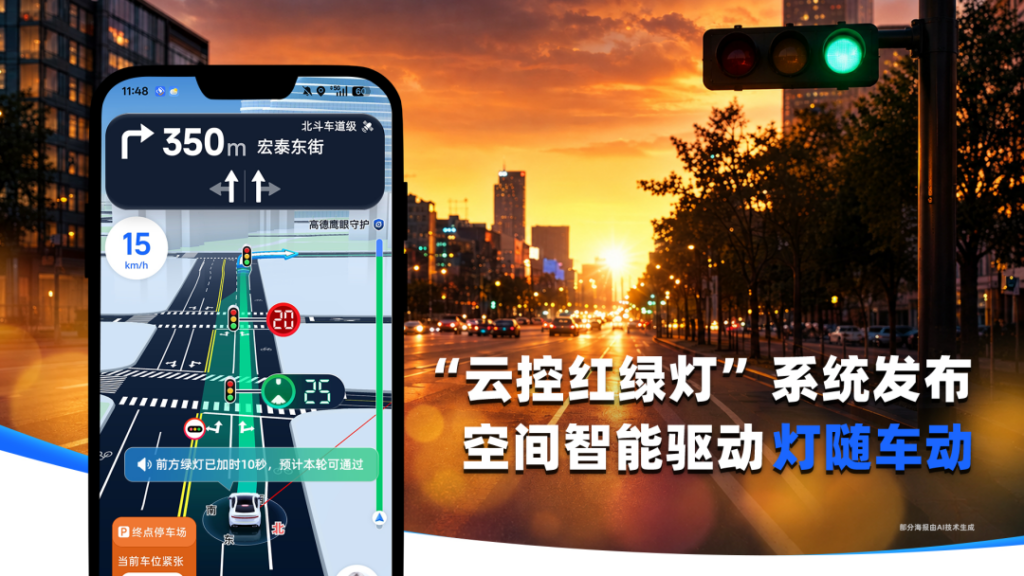
On November 16, 2026, Amap (Gaode) announced a “cloud-controlled traffic light” system designed to adjust signal timing in response to traffic. The company said it was working with Beijing traffic police to pilot the system at nearly 100 intersections in the city’s Chaoyang and Fengtai districts, among other areas.
According to Amap, the system uses its traffic data and spatial intelligence technology to assess vehicle flows and provide signal-timing recommendations to Beijing traffic police. Amap said measurements at optimized intersections showed a 19.4% reduction in average vehicle stopping time and a 19% improvement in traffic throughput. Those figures are reported results of the pilot, not a citywide assessment.
Amap gave two intersection-level examples. At Juzifang Road and Gaoyangshu Middle Street, redistributing existing green-light time was associated with a 15.6% increase in traffic flow and a 23.3% decrease in average stopping time. At Taiyanggong North Street and Xibahe Road, adding a dedicated southbound green phase was associated with an 11% increase in flow and a 28.9% decrease in average stopping time.
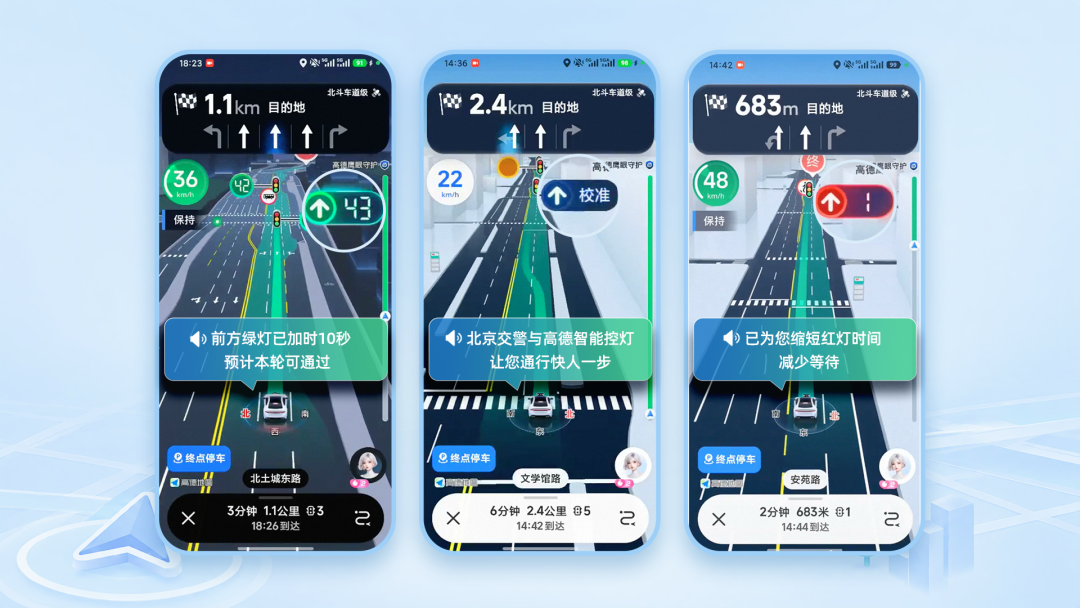
The company said the system does not require additional roadside cameras. Its app can alert drivers approaching participating intersections through voice and map notifications, including when a green light has been extended. Separately, Beijing traffic police have connected signal data from more than 5,000 intersections to Amap to improve the app’s traffic-light countdowns; previously, Amap estimated those countdowns from historical traffic data, live traffic conditions and signal patterns.