In an account published on November 16, 2026, Zuoyebang described how it combined Apache Flink job autoscaling with Kubernetes workload rescheduling. The company said Flink jobs using its Autoscaler consumed about 30% fewer computing resources than under its previous fixed-parallelism configuration. That figure is Zuoyebang’s reported operational result, not an independently verified benchmark.
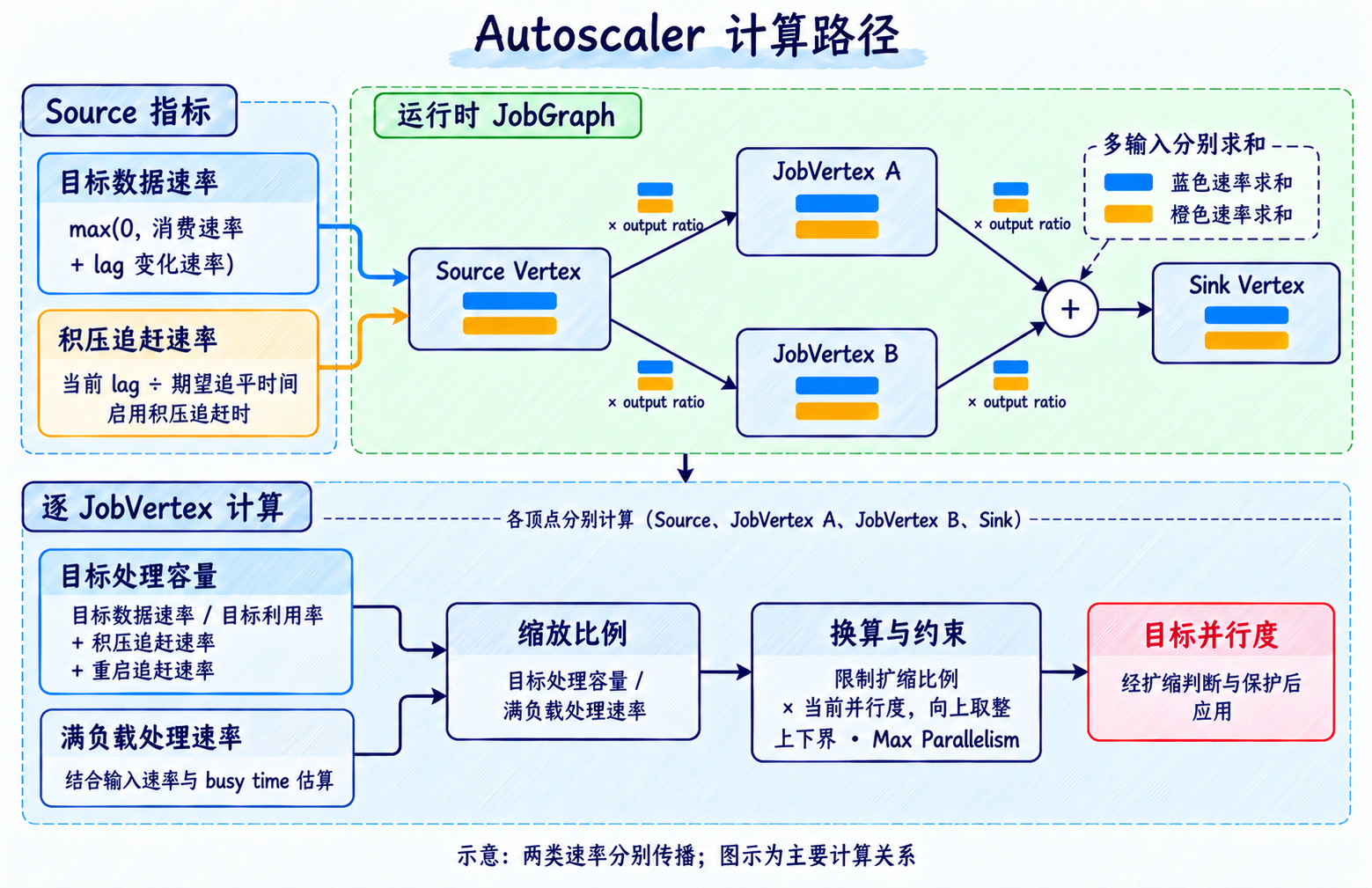
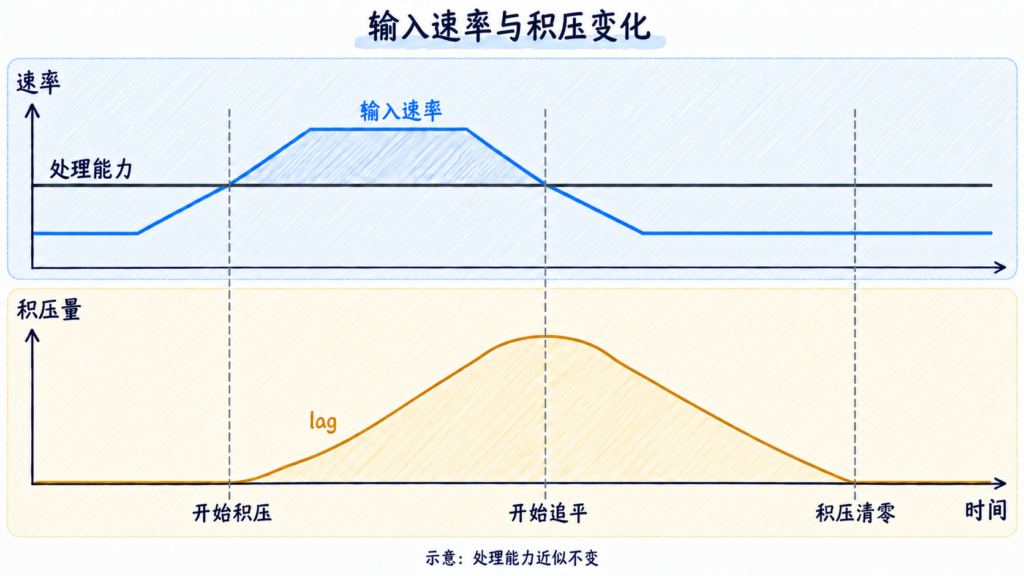
The problem was not simply that traffic rose and fell. A fixed parallelism sized for peak demand left resources idle at quieter times, while a lower setting risked growing backlog. Bottlenecks could also move between a source, an intermediate operator and a sink. Zuoyebang used the Flink Kubernetes Operator’s Autoscaler to calculate target parallelism for individual JobGraph vertices rather than scaling every stage together. Its calculation considers incoming data, existing lag, a desired catch-up period and observed processing capacity. Kubernetes HPA alone would not change those vertices’ parallelism.
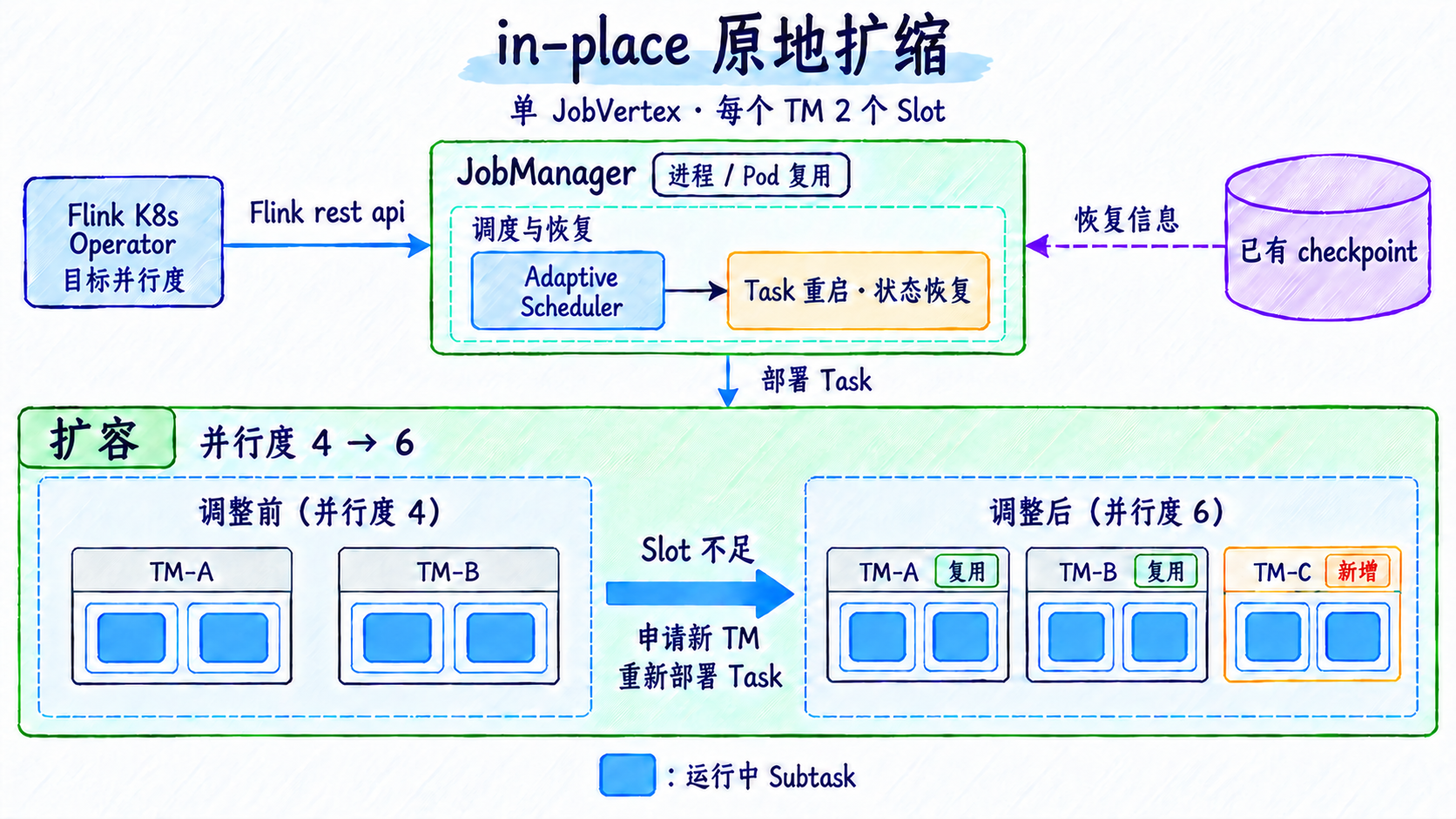
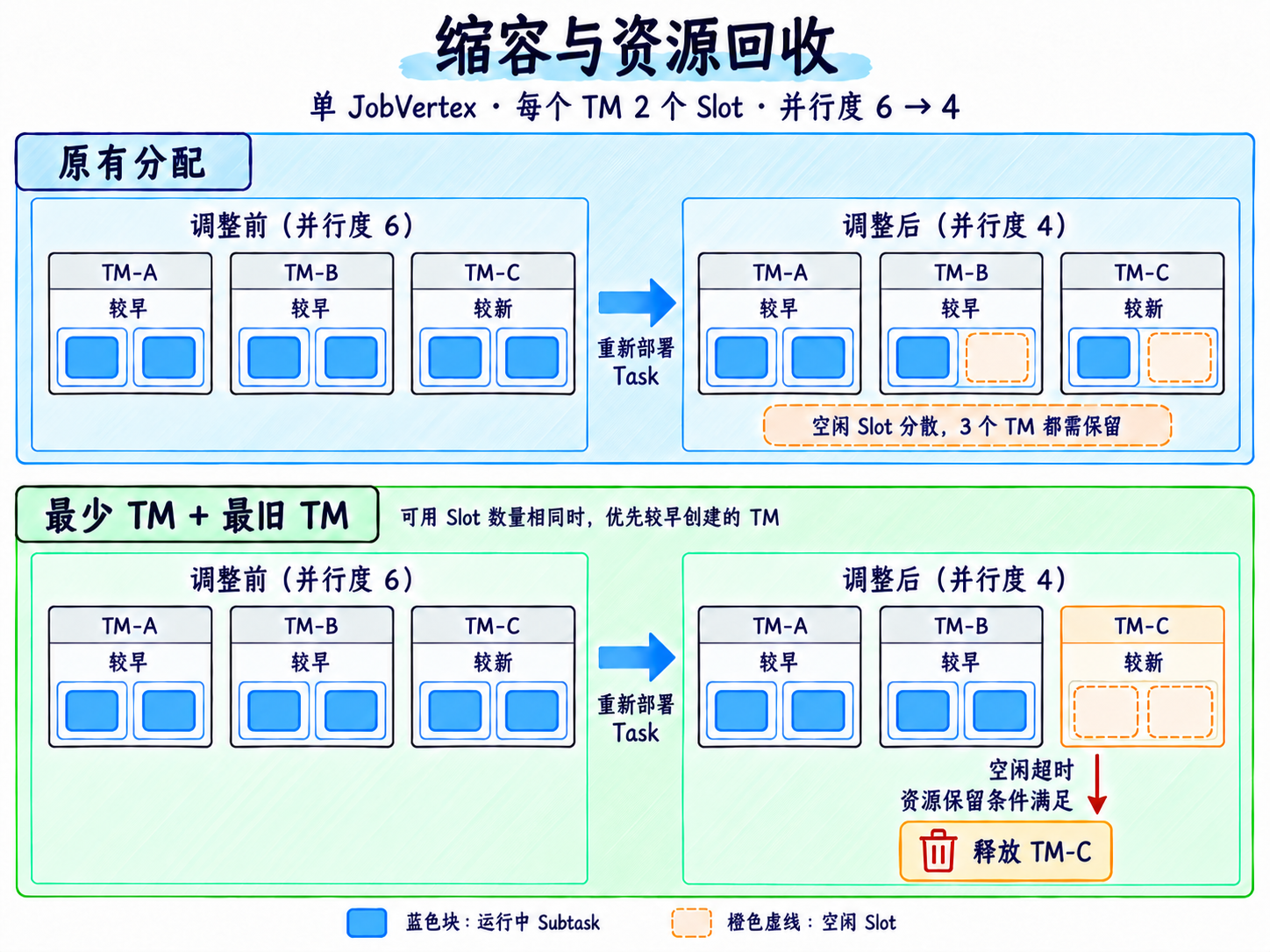
Changing parallelism also meant recovering state and releasing resources. Zuoyebang adopted in-place scaling to reuse existing JobManager and TaskManager processes and Pods. Flink still rebuilds the job’s execution graph; for stateful work, it can restore from an available checkpoint. The company found that reducing parallelism did not always free TaskManager Pods because remaining tasks were spread across them. On its Flink 1.19.1 branch, it backported fixes associated with FLINK-33977, FLINK-36201 and FLINK-37813 to help consolidate tasks and correct resource accounting. It also added a preference for older TaskManagers when otherwise suitable slots were tied, giving newer ones a better chance of becoming idle and eligible for release.
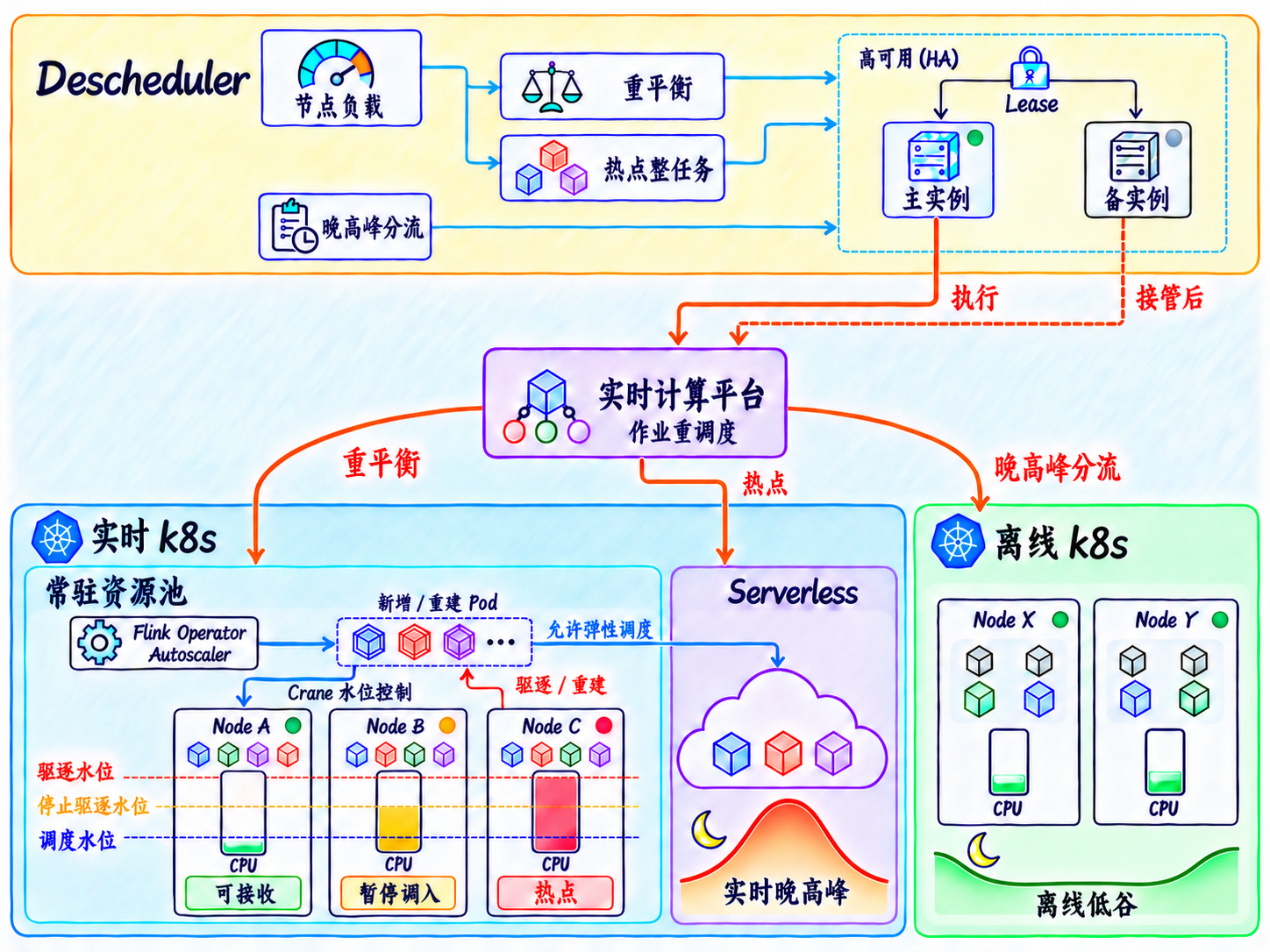
Autoscaling did not, by itself, resolve overloaded Kubernetes nodes. Zuoyebang said it used Crane to steer new Pods away from heavily loaded resident nodes and evict eligible Pods when node load crossed configured thresholds. To limit repeated evictions and job recovery, it added a job-level Descheduler that assesses a job’s contribution to a hotspot and can redeploy the whole job within the resident pool or move its compute load to Serverless capacity. For its recurring evening peak, it also scheduled some jobs onto Serverless or spare capacity in an offline Kubernetes cluster. According to the account, its real-time peak was mainly 18:00–22:00, while offline workloads peaked mainly 00:00–05:00 the following day.
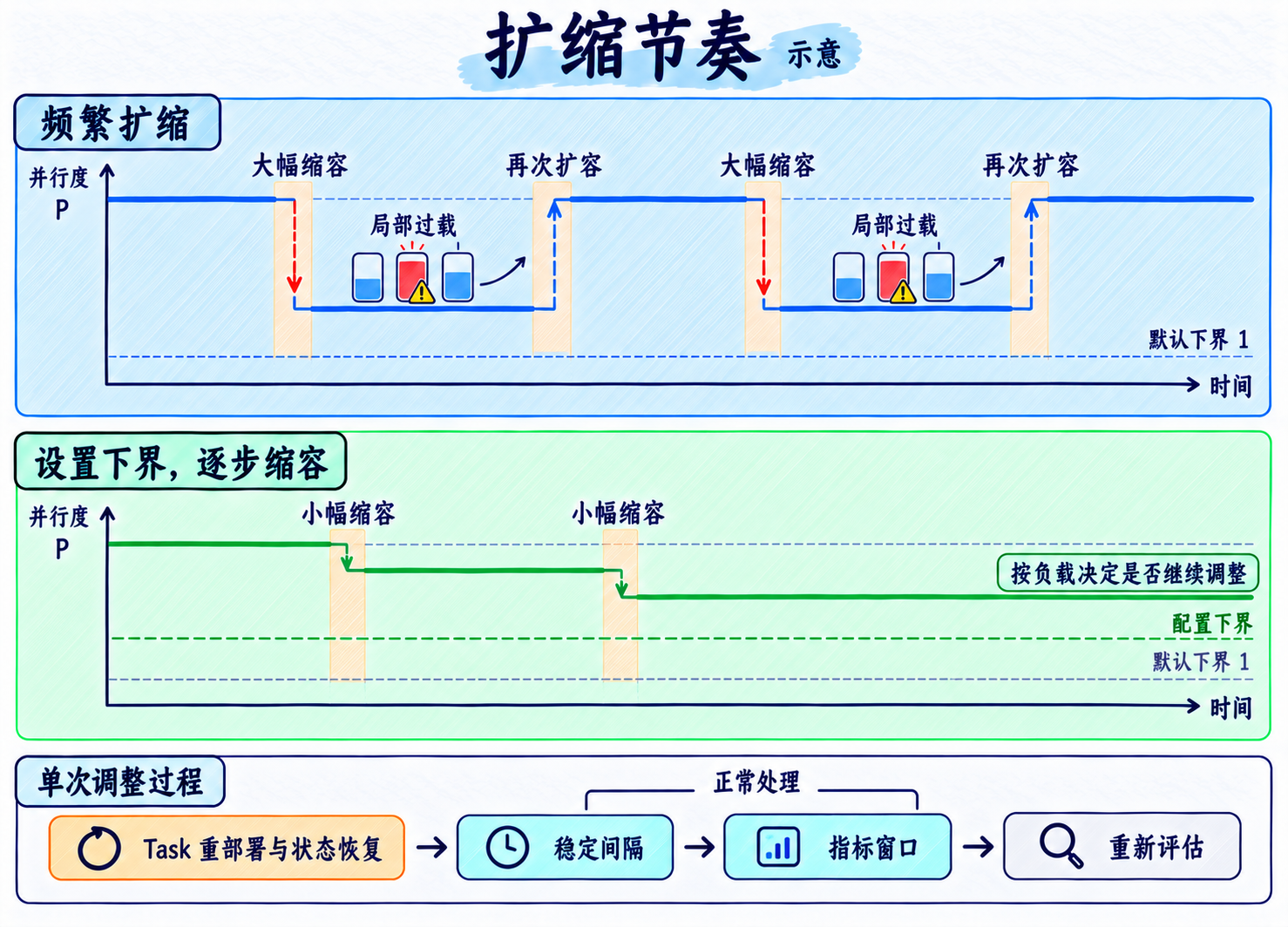
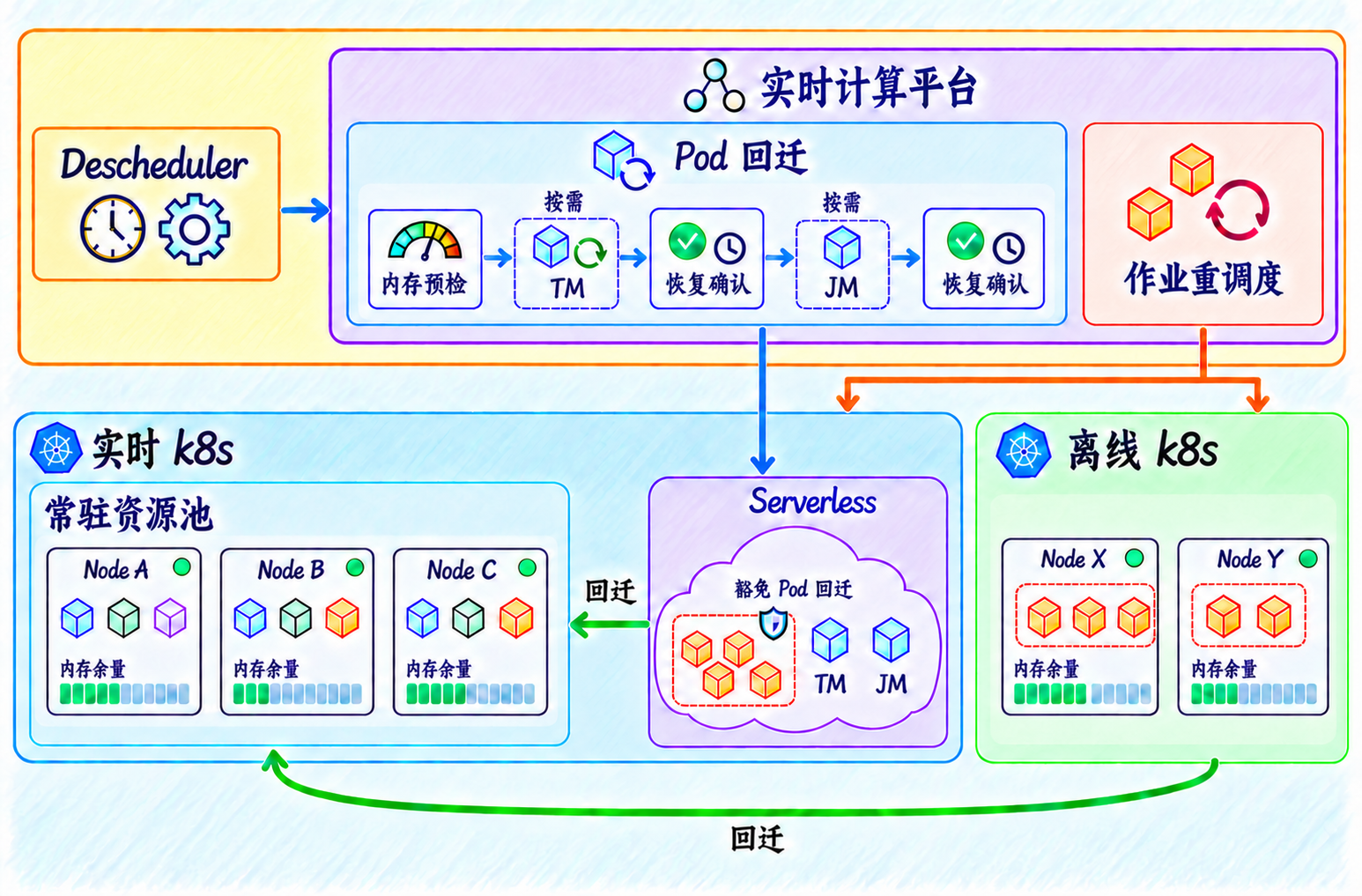
Returning borrowed capacity required a separate process. After a peak, the platform checked available memory on resident nodes before moving jobs or Serverless Pods back, then verified that tasks had recovered before proceeding to another migration stage. Zuoyebang said tighter scale-down limits reduced disruptive changes but slowed resource release. Moving entire jobs off hotspot nodes relieved contention, it added, but could also move work that had not itself been on an overloaded node.
Zuoyebang reported using the Operator 1.9 branch at the time of its account. It identified later Operator features—including delayed scale-down introduced in 1.10 and a BALANCED parallelism-alignment strategy in 1.16—as options to evaluate, not changes it said it had deployed.