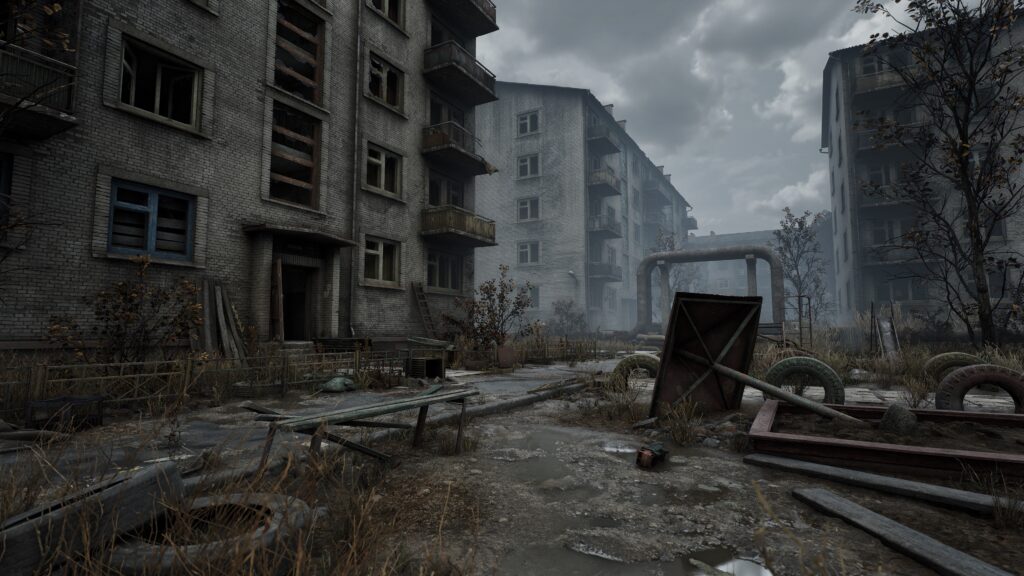
When senior environment artist Stanislav Petrushin started designing the Soviet-era brick apartment buildings for Into the Radius 2, the team did not yet know how many buildings it needed or which apartments players could enter. His solution was to give every floor a basic internal layout, then let designers add furnished rooms where gameplay called for them. Even an apartment players could never enter had to look convincing to someone leaning toward a broken window in VR.
Seven buildings, one architectural kit
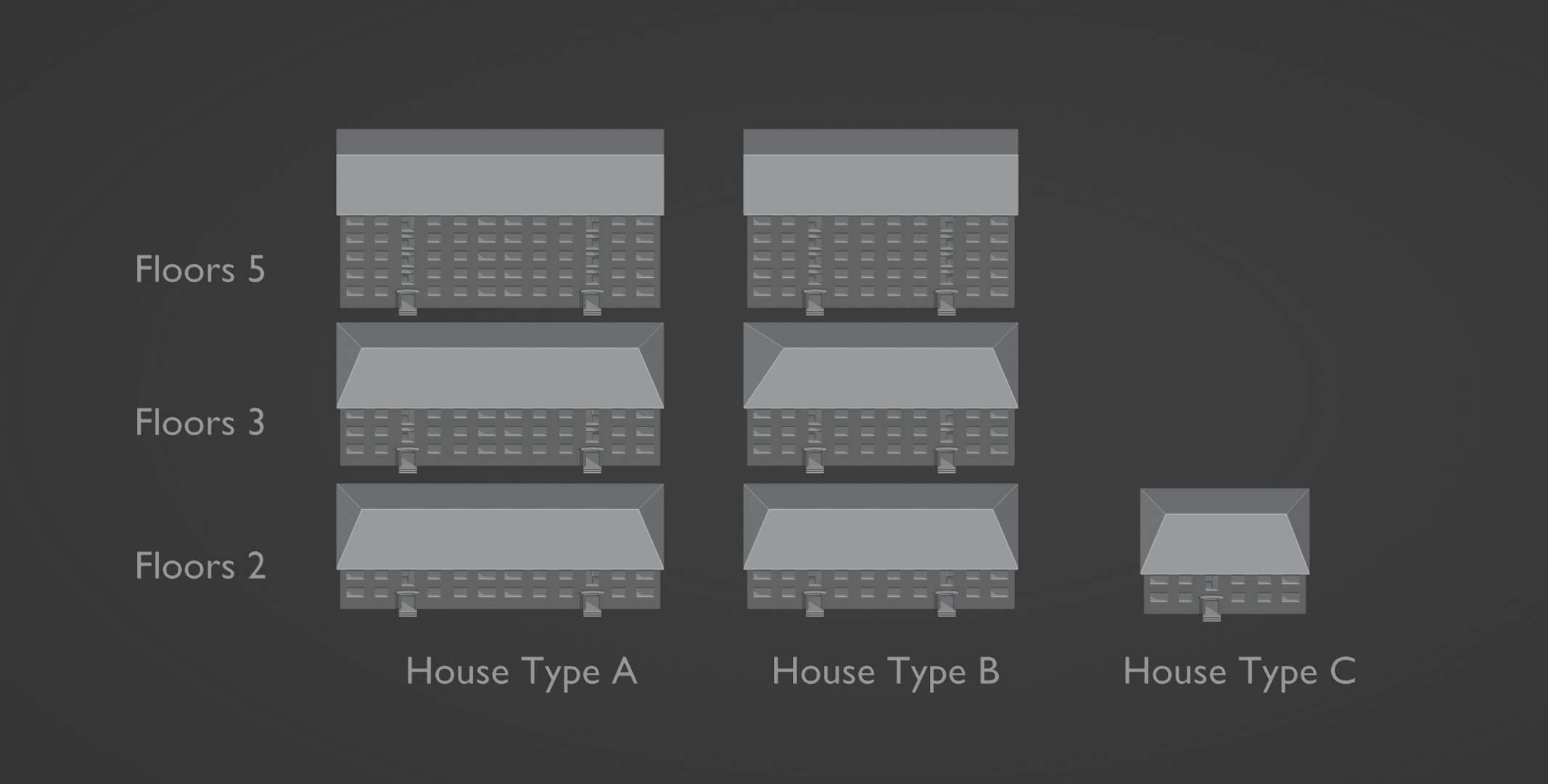
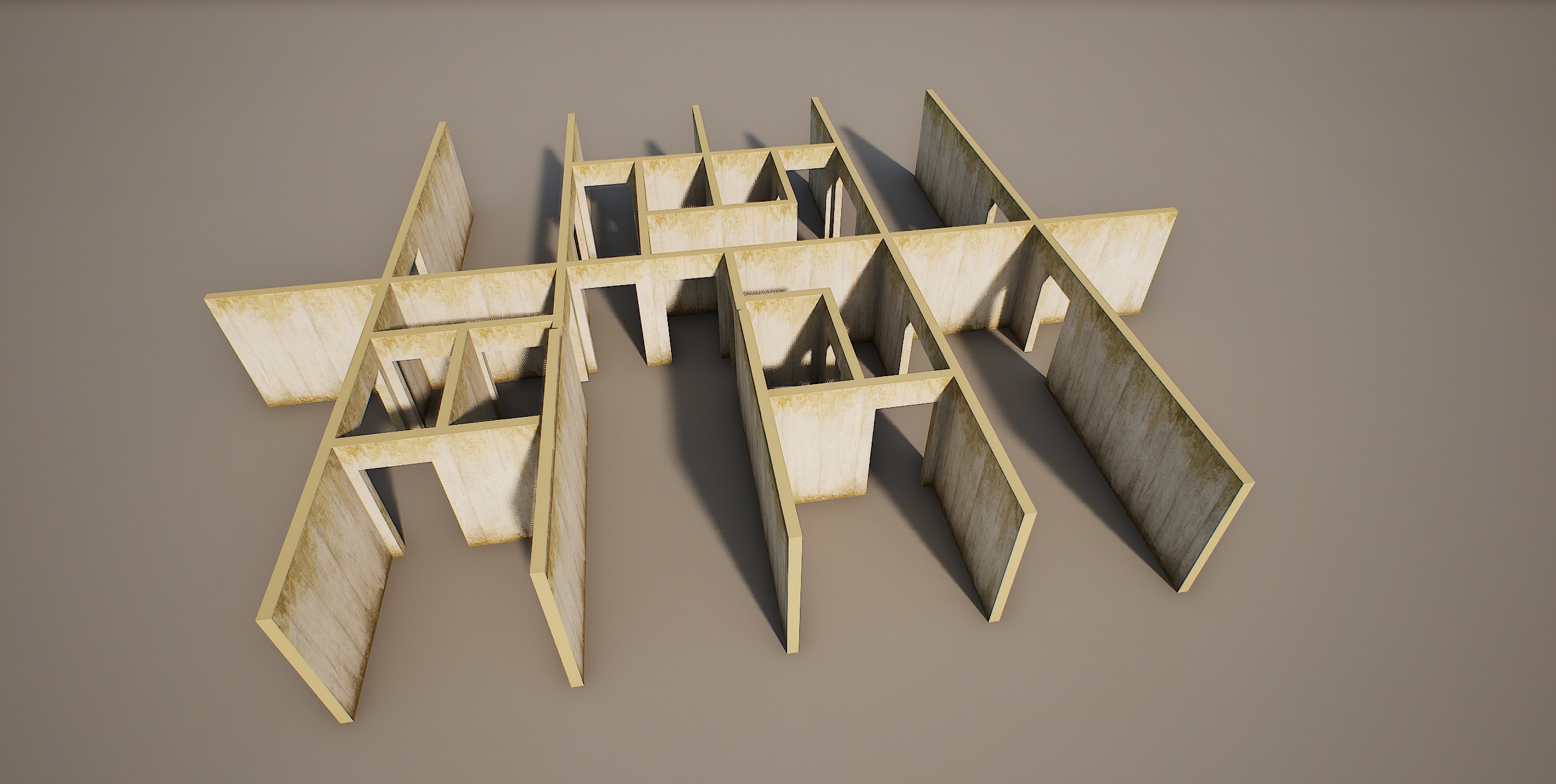
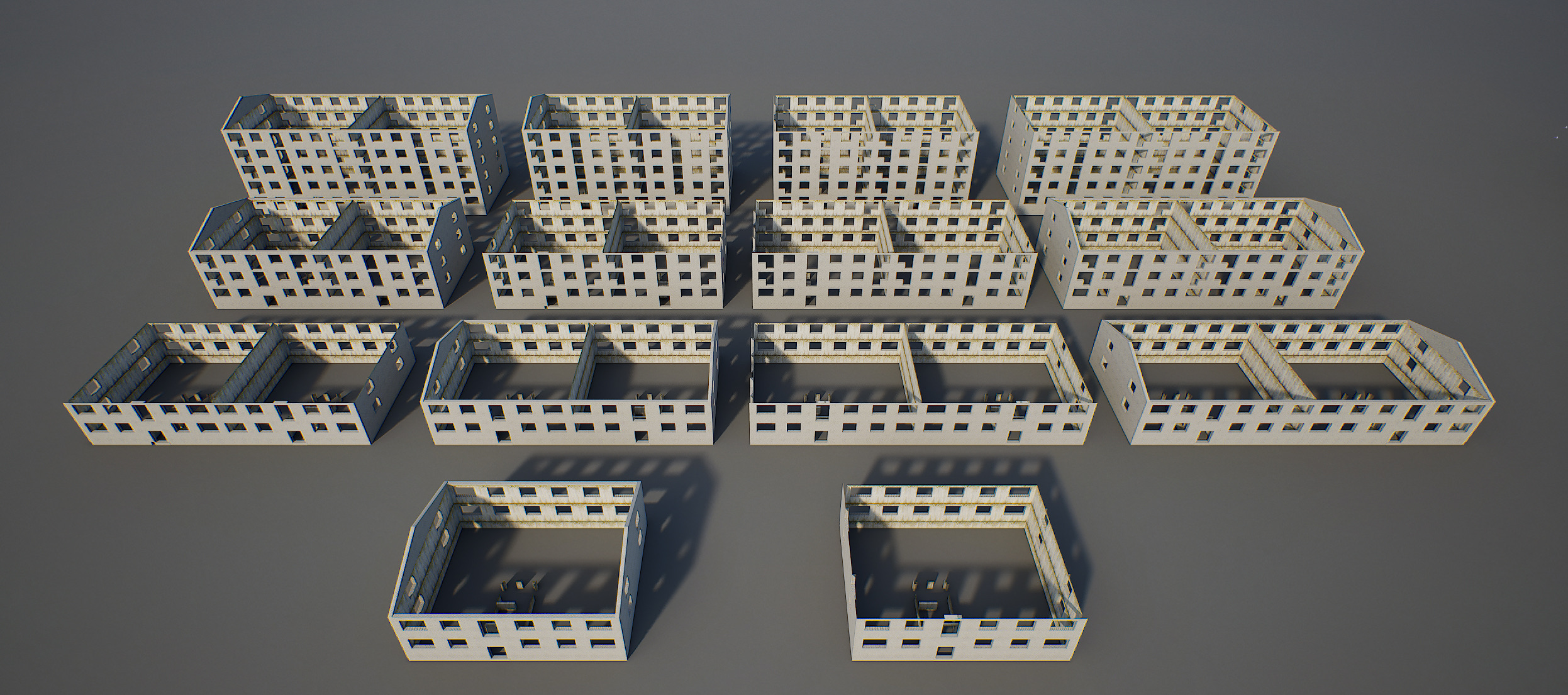
Petrushin started with real architectural drawings and floor plans, then tested rough models in a headset. Some spaces that looked correctly proportioned on a monitor felt different when he stood inside them, so he adjusted their dimensions. The kit ultimately supported seven configurations: two lengths of two-entrance building, each available with two, three or five floors, plus a smaller two-story building with one entrance. Gable and hip roofs offered another way to vary the skyline.
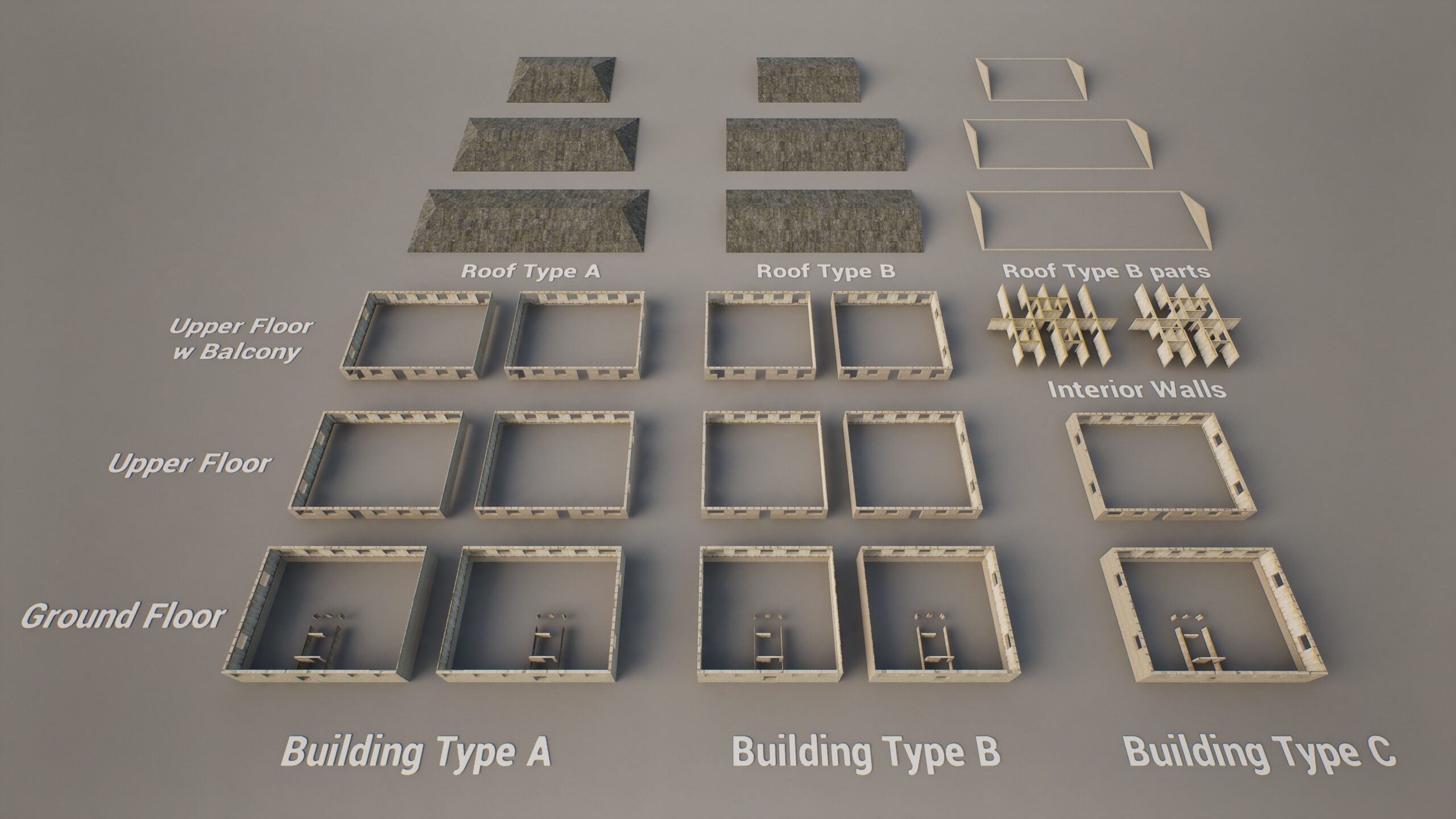
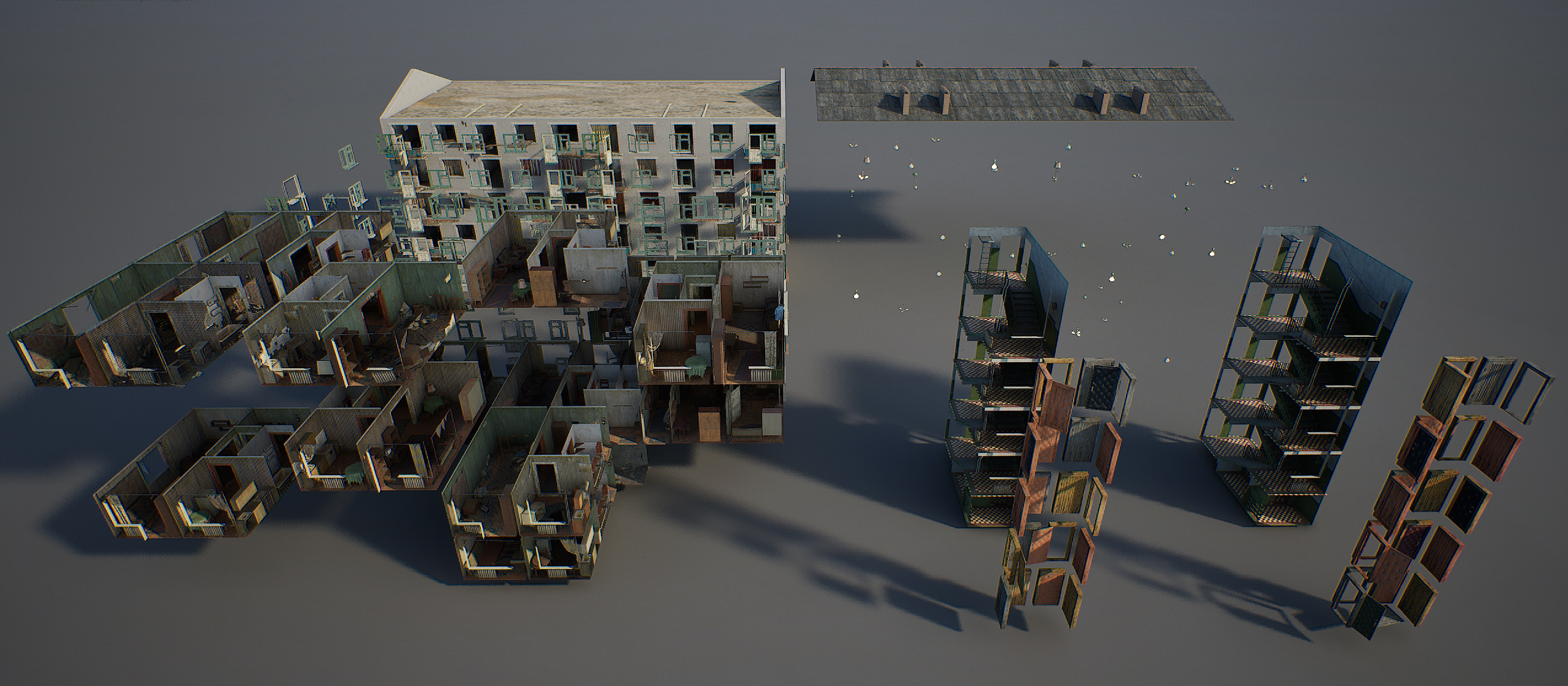
He organized each building into four layers using Unreal Engine’s Level Instances, which let a team reuse groups of objects. The first layer held the structure, including the basic walls that divided each floor into rooms and corridors. The second held replaceable detailed interiors. Windows, doors and lights formed a third layer, independent of the rooms: opening a window in one apartment would not open it in every copy of that room. The fourth layer held gameplay and audio elements so designers and artists could work on the same building in parallel.
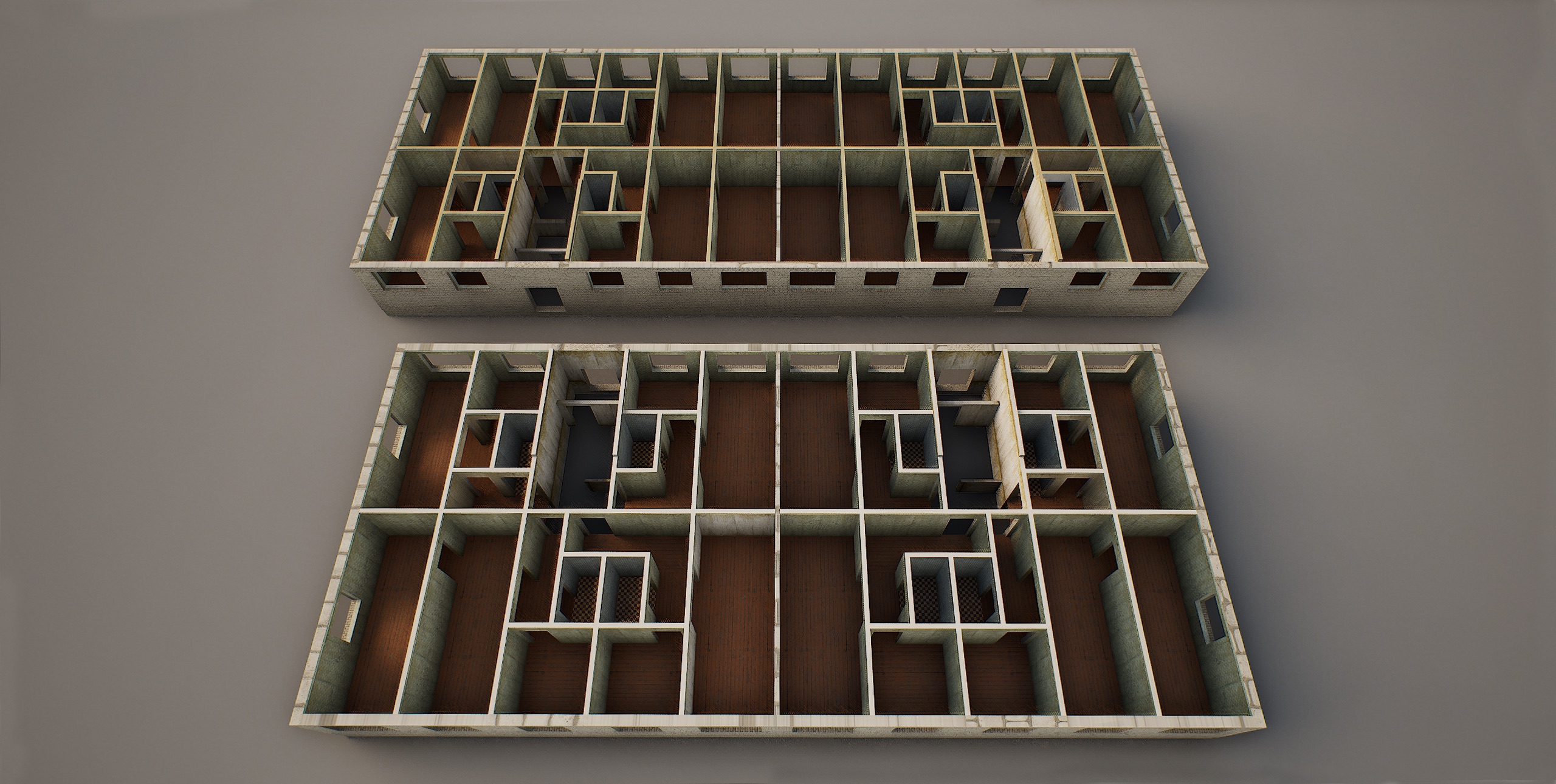
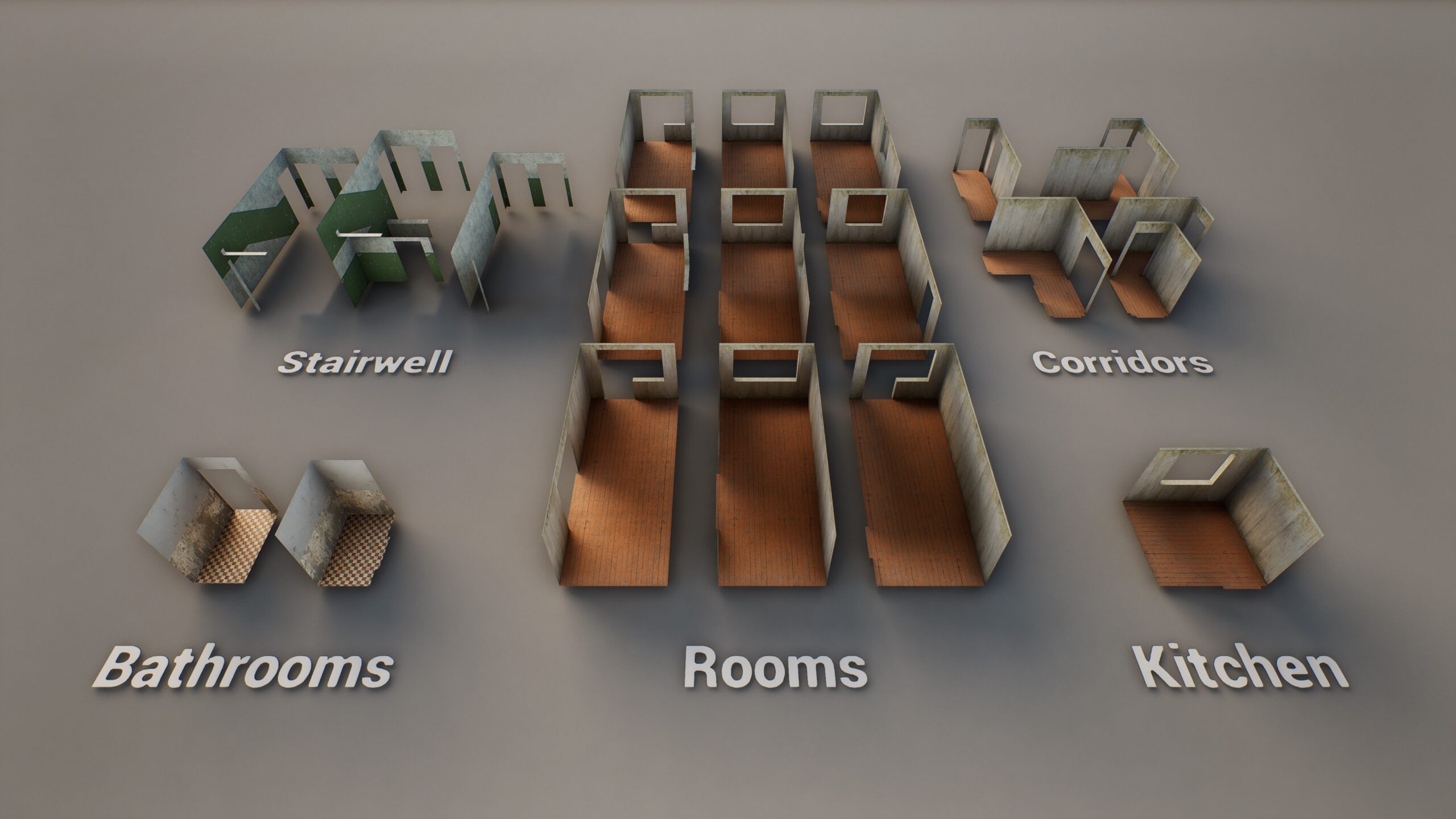
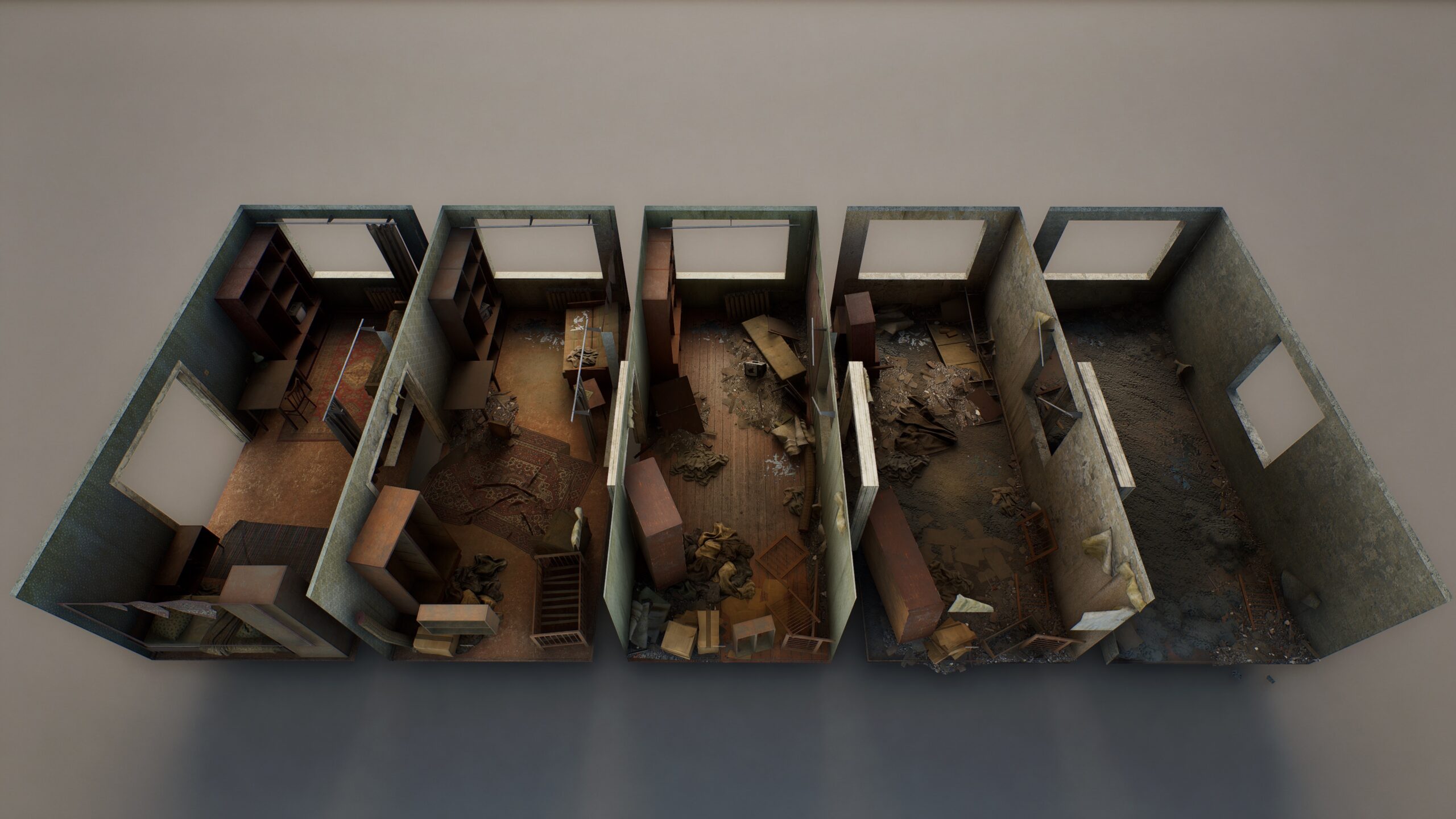
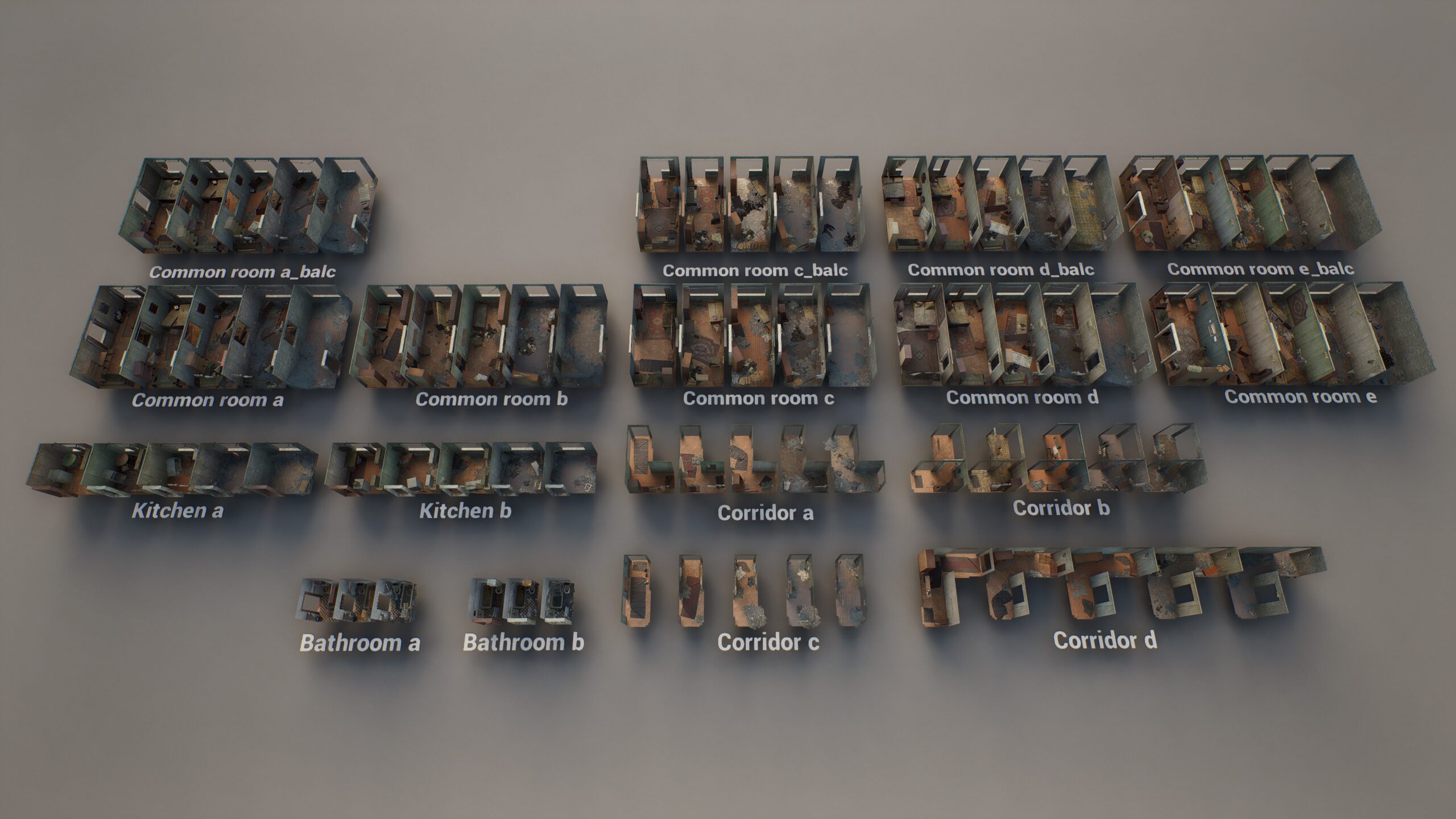
Depending on the building type, a floor could contain 36 or 40 spaces, counting kitchens, bathrooms and corridors. Petrushin covered those layouts with 16 distinct room modules that supported up to five stages of decay. He designed the system and created its geometry and materials; a level artist furnished and dressed the rooms.
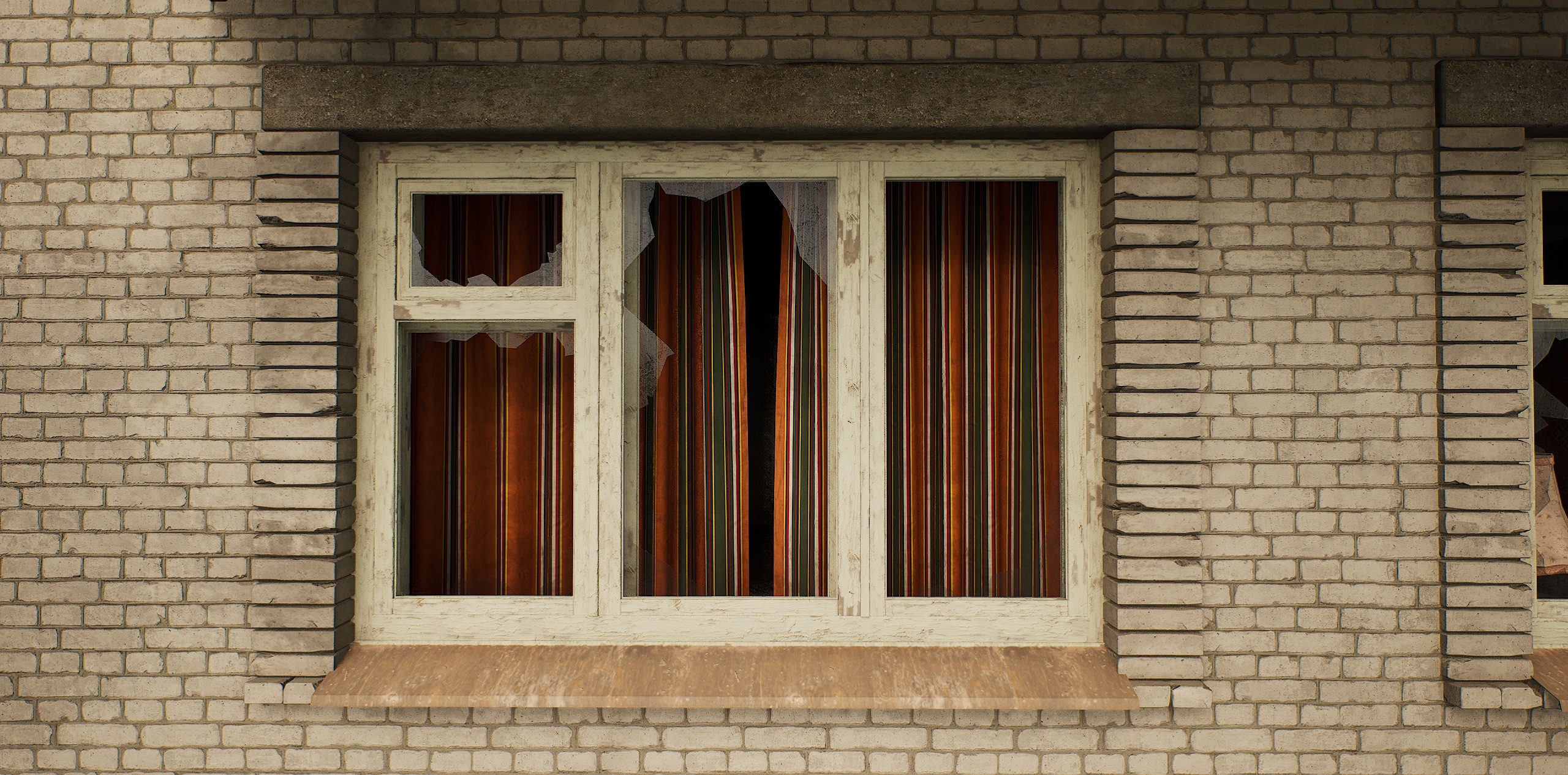
What players see through a broken window
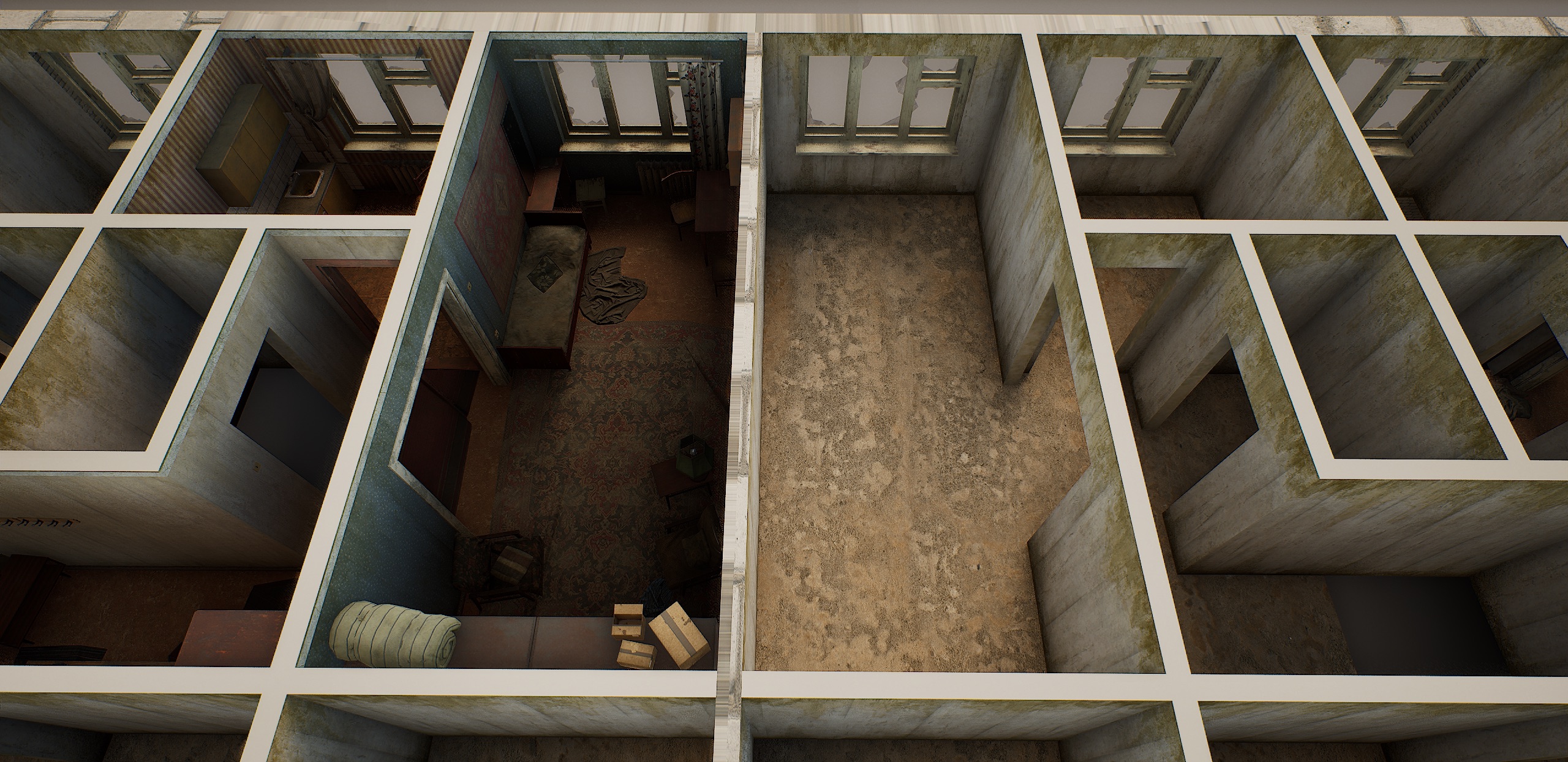
The team could not rely on a flat illusion of a room: a player could approach the window and look through it from several angles. Instead, the basic walls and simple floor slabs gave even unfurnished apartments real depth. They used low-resolution color textures without normal or roughness maps. Curtains, boards or furniture partly blocked selected windows, leaving enough of the space visible to suggest a room beyond the glass.
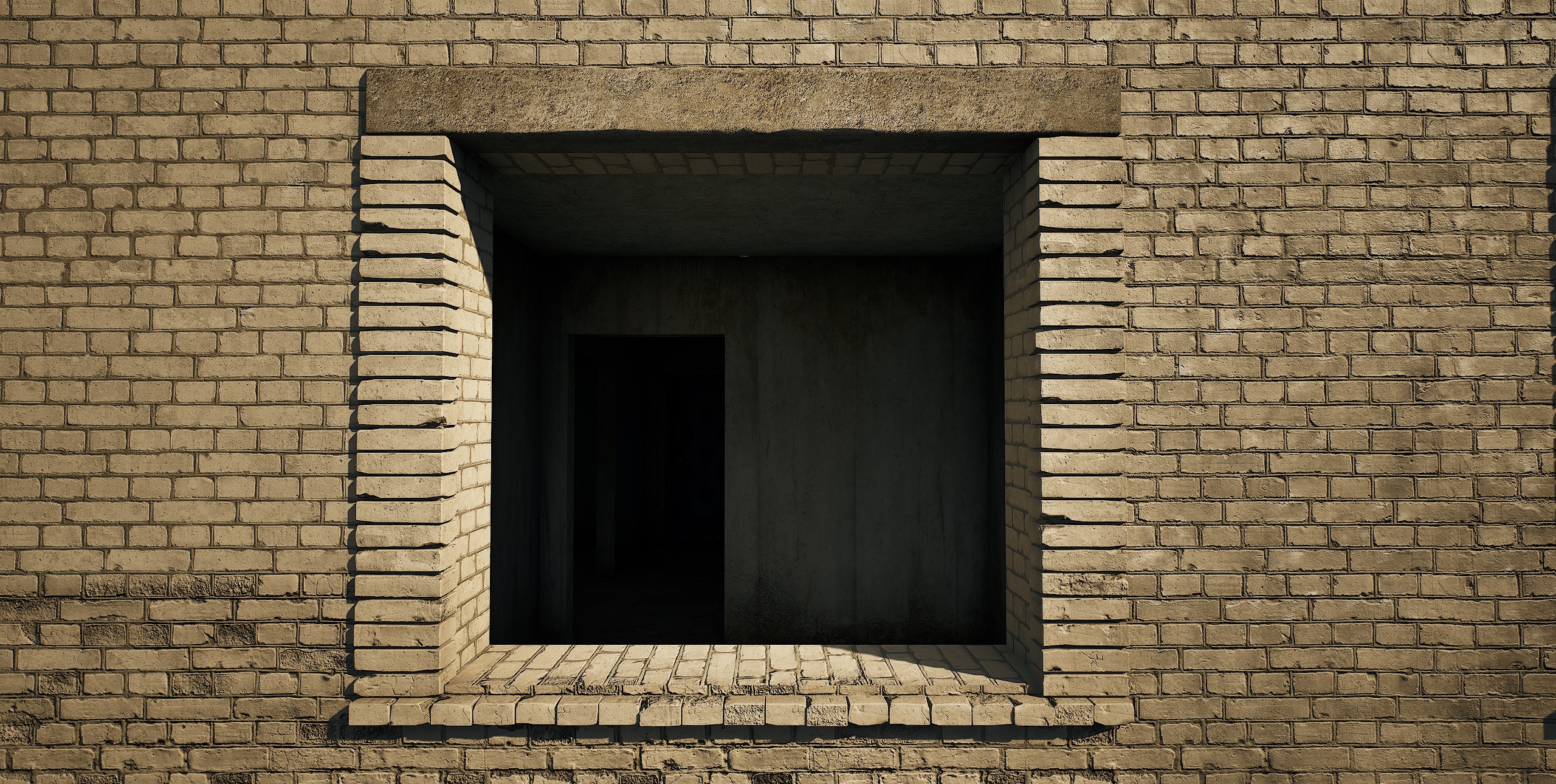
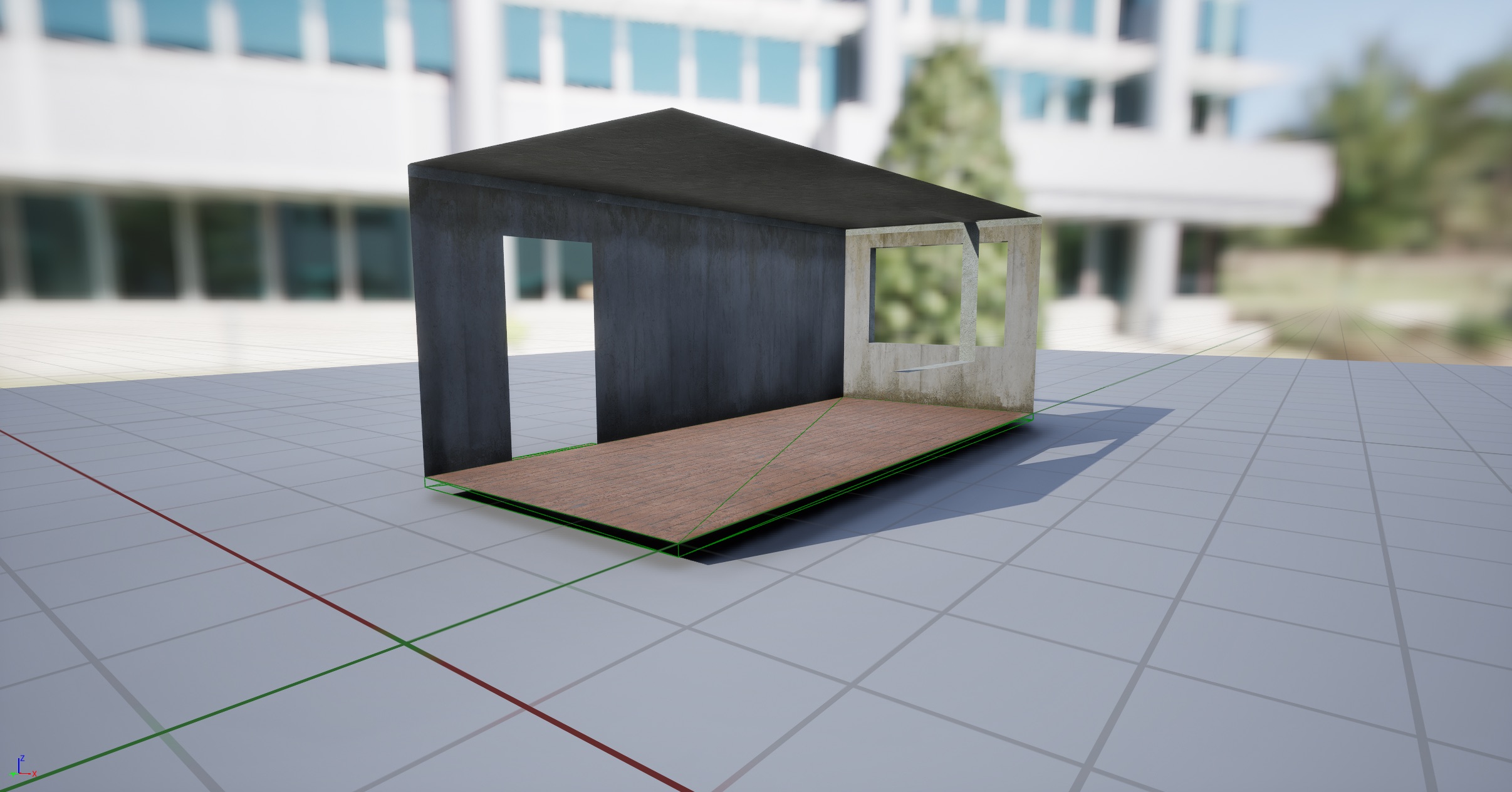
Those walls did a second job in accessible apartments. They provided the collision surfaces that stop objects passing through walls, while the detailed room supplied the visible finish. Petrushin placed that finish just far enough in front of the basic wall to keep the two surfaces from flickering, but close enough for impact marks to appear on the wall players could see.
When a window no longer needs 18 parts
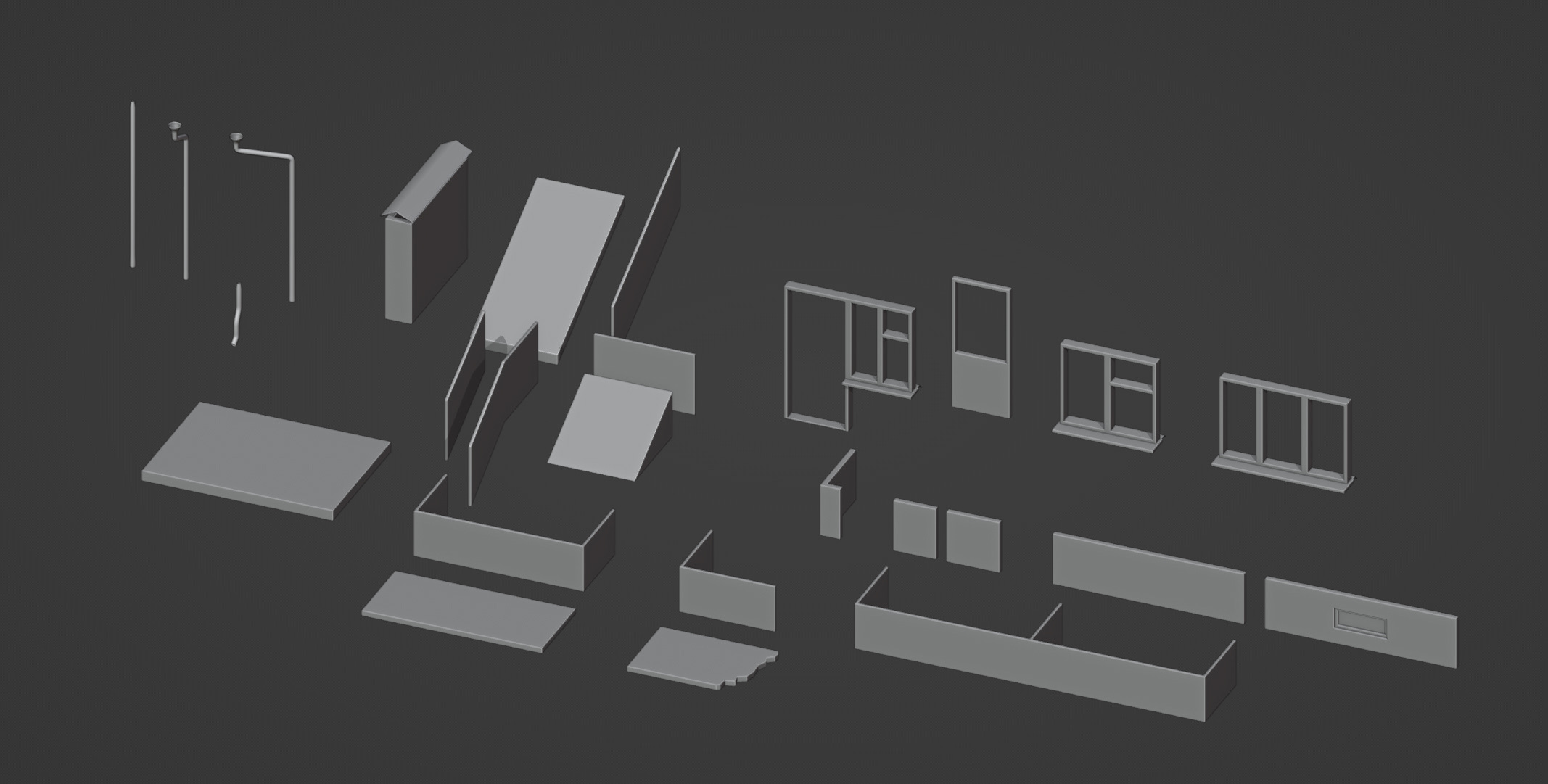
Once the layouts were settled, Petrushin merged exterior modules into larger shells, reducing the number of separately managed objects, or actors, and avoiding shadow seams. Windows offered a particularly useful saving. A configurable window with a frame, movable sashes and broken panes required 11–18 actors. On one five-story facade with about 50 windows, that amounted to roughly 550–900 actors for the windows alone.
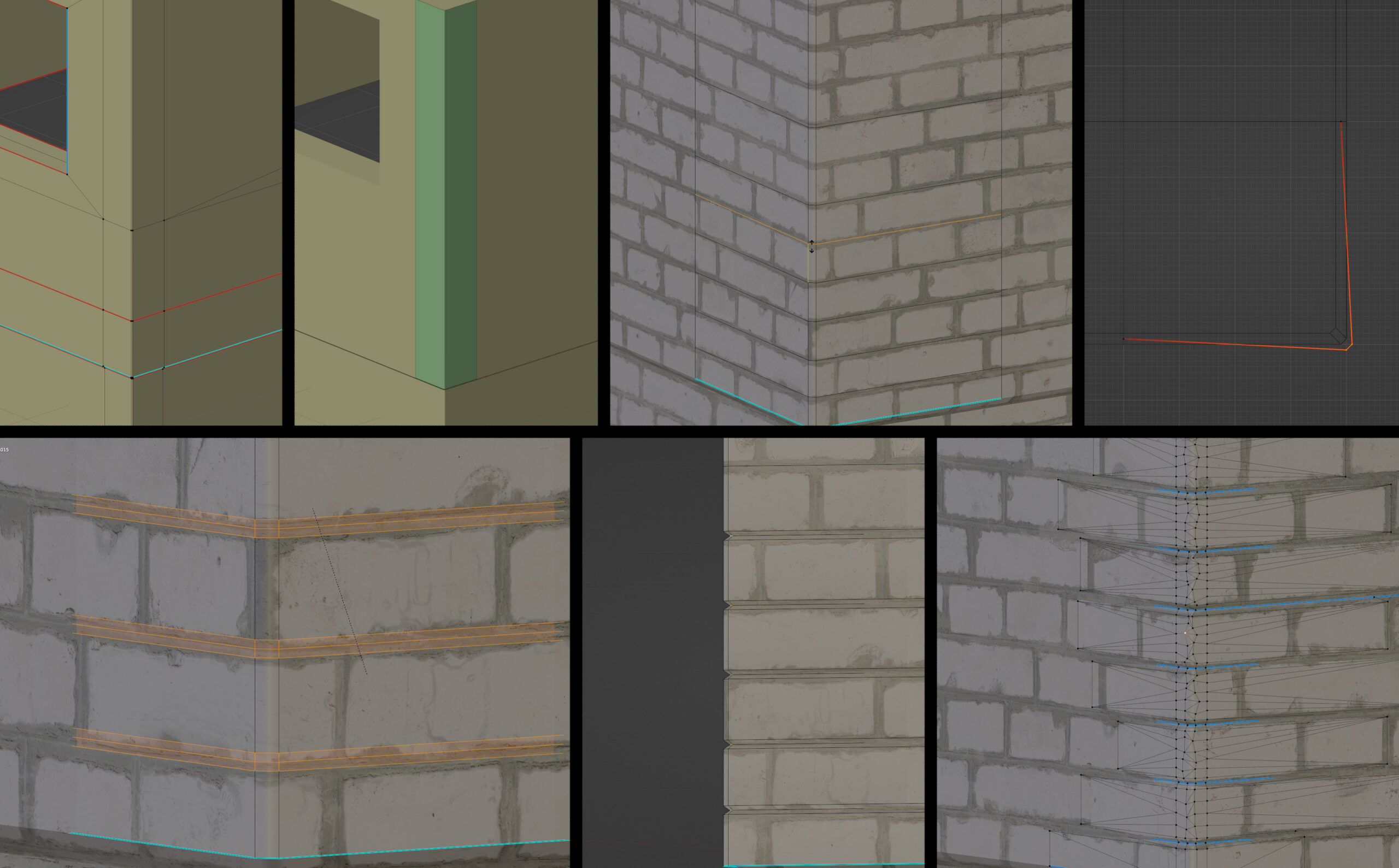
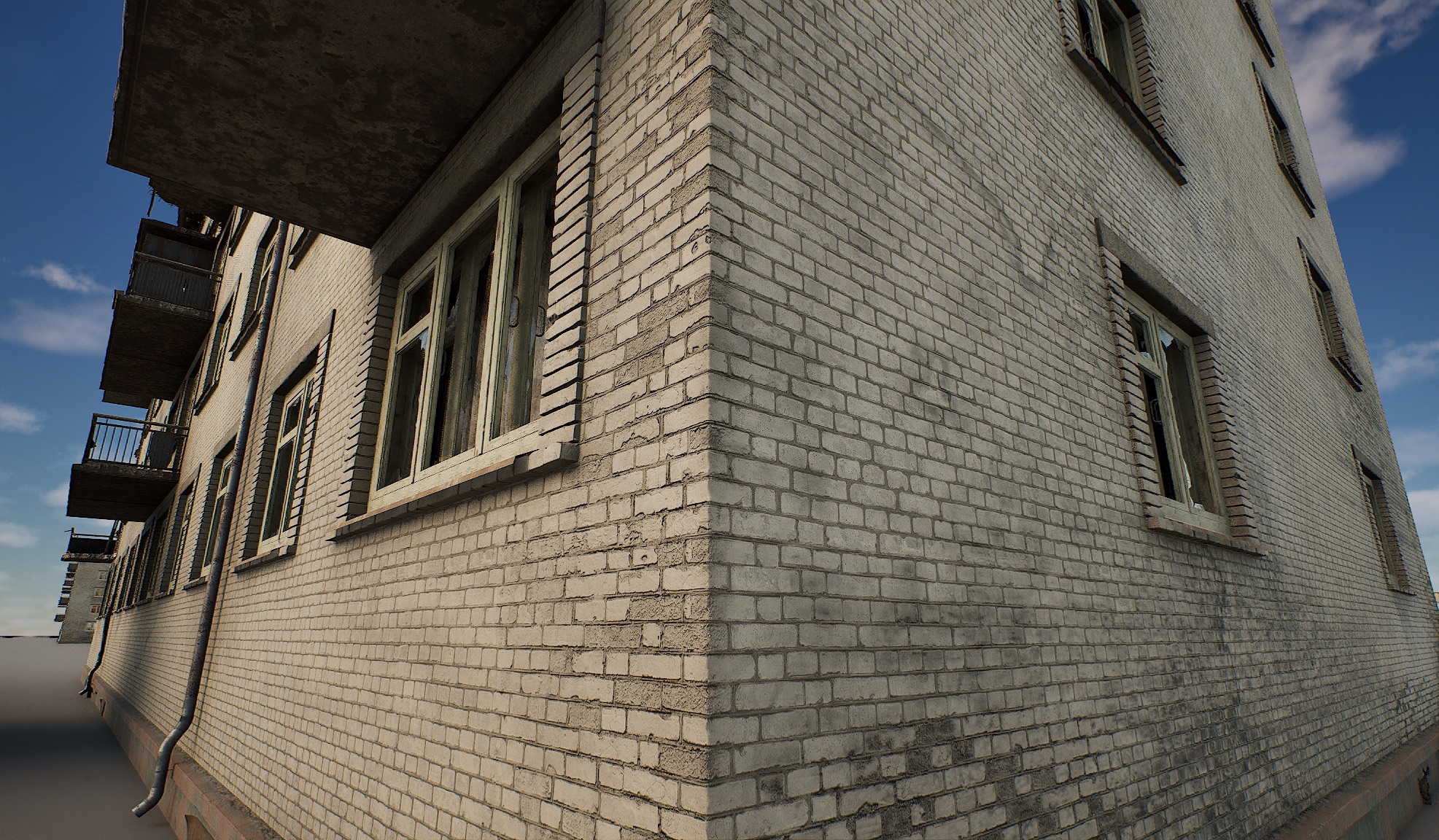
Most windows did not need to open. Petrushin made three closed versions of each type, each a single static mesh with a different broken-glass pattern. Keeping the more elaborate assemblies only at selected openings brought the window actor count on that facade below 80.
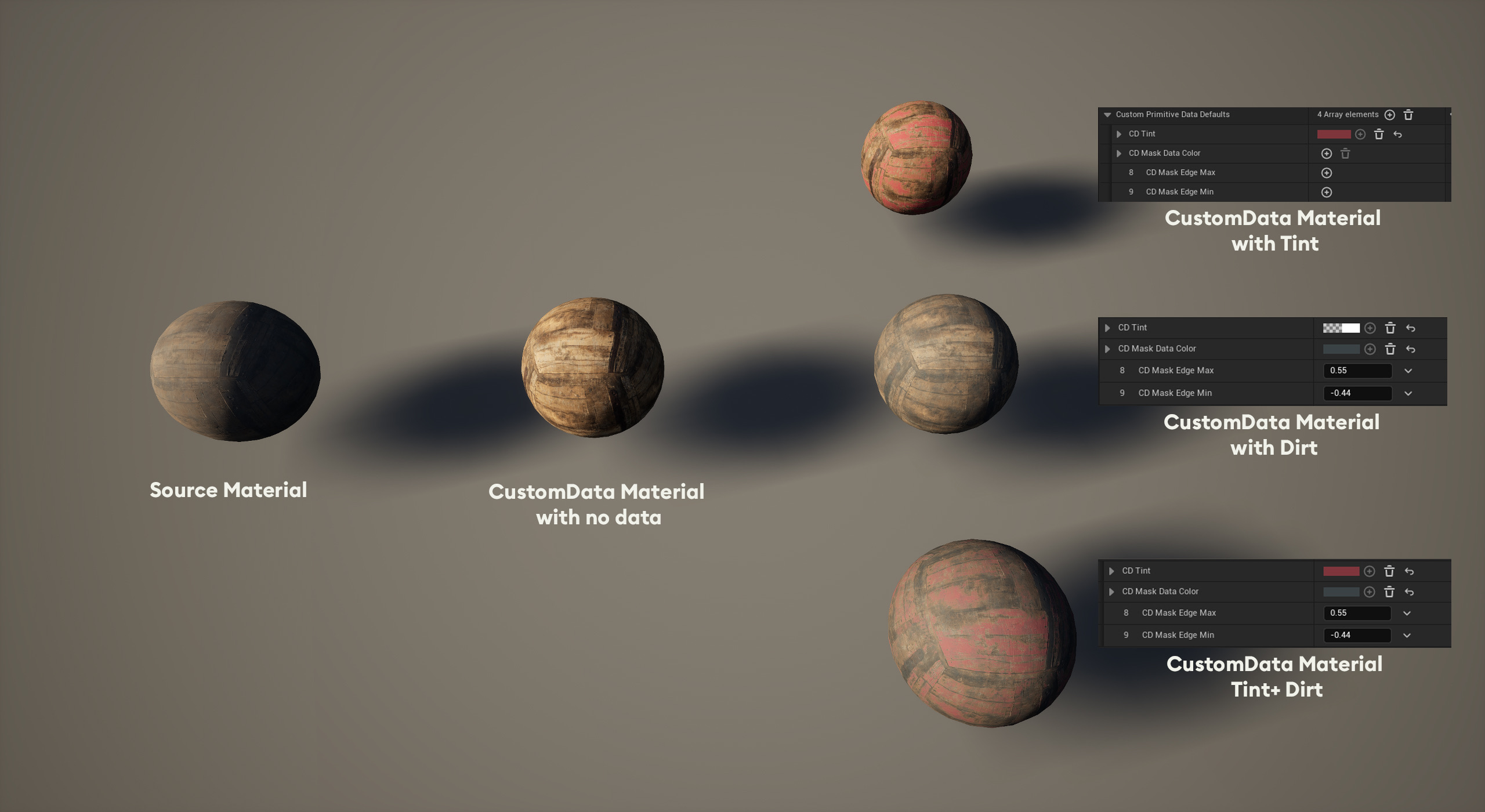
He applied the same reasoning to materials. A wall showing intact wallpaper did not need the shader operations used to blend exposed plaster, dirt and ash. A simpler version cut one wall material from 608 shader instructions to 298. A floor material went from 528 to 254 and a ceiling material from 476 to 254. Rooms in intermediate stages of decay retained the layered materials because players could see the surfaces blending there.
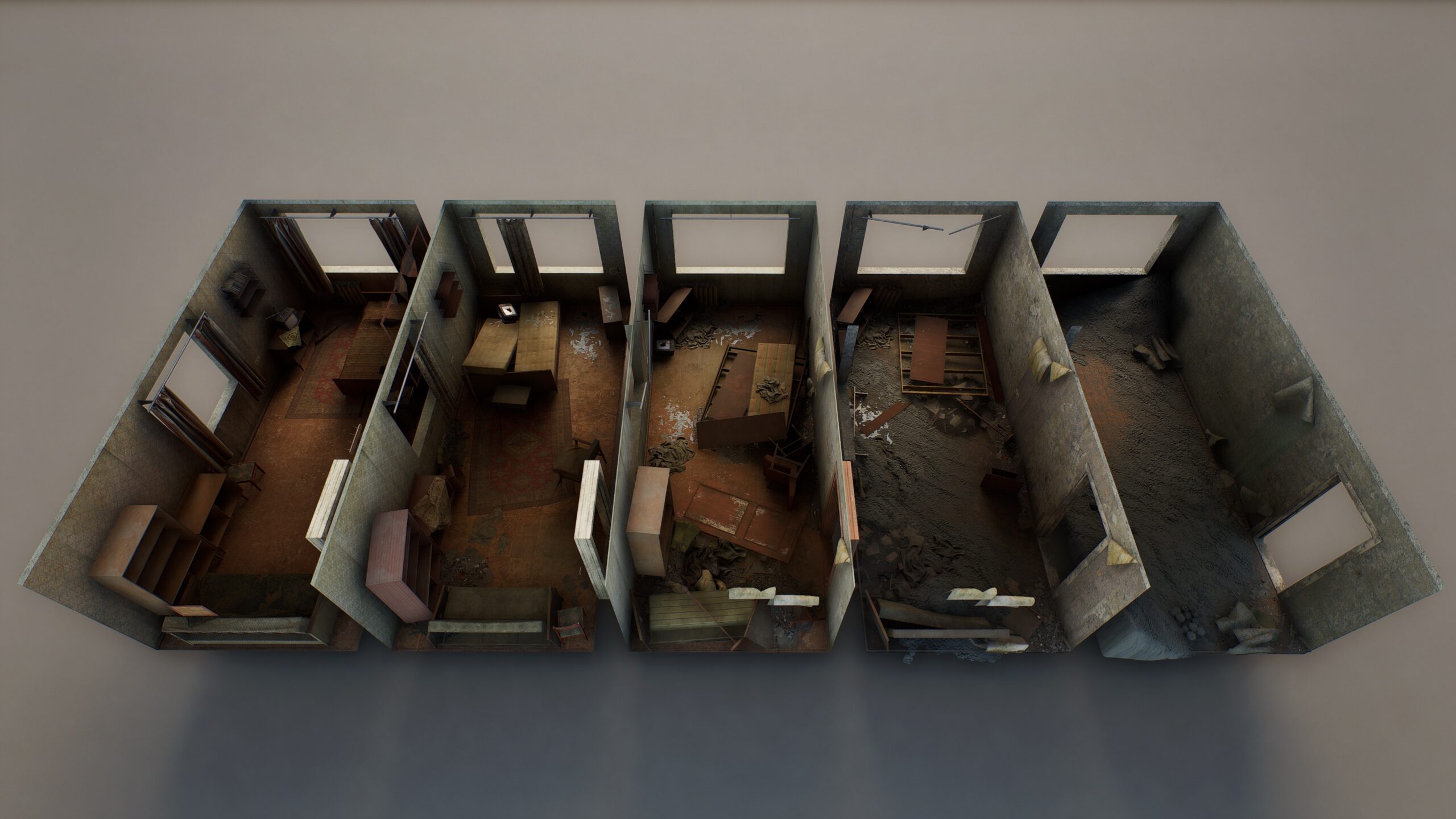
What the performance comparison showed
Petrushin tested the room variations from a fixed camera position in the Unreal Editor, forcing every mesh to its highest geometric detail so automatic detail switching would not affect the comparison. After changes to materials, shadows, textures and geometry, he reported lower rendering costs for the base, shadow-depth and prepass stages, as well as lower texture memory use. Frame time and draw-thread time improved even though mesh draw calls rose slightly.
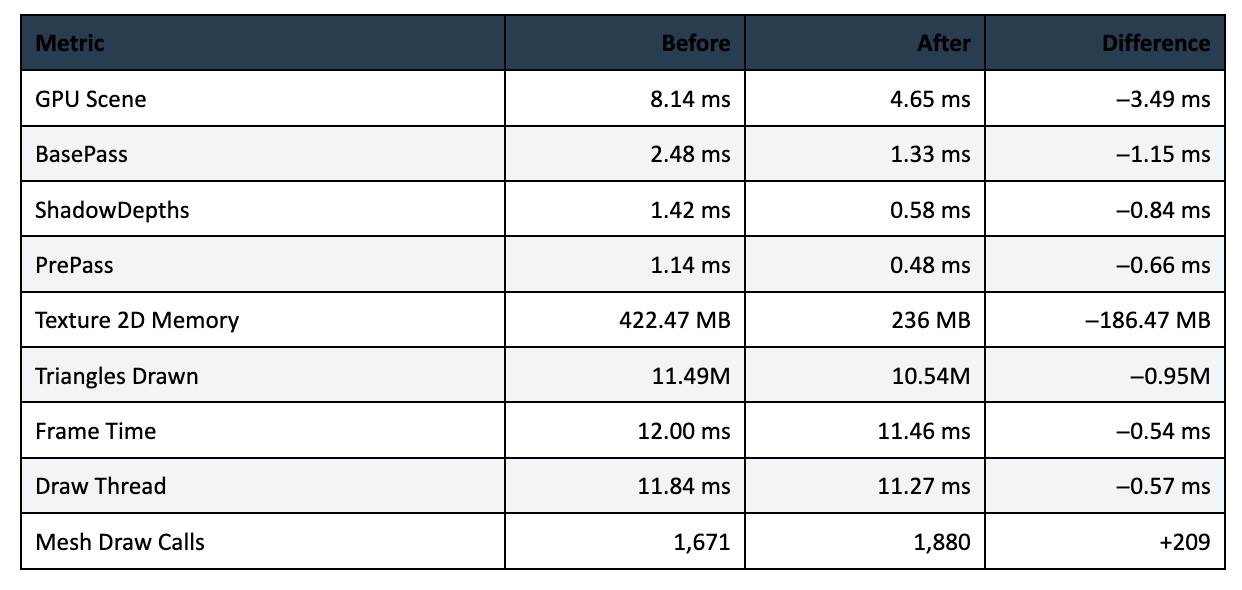
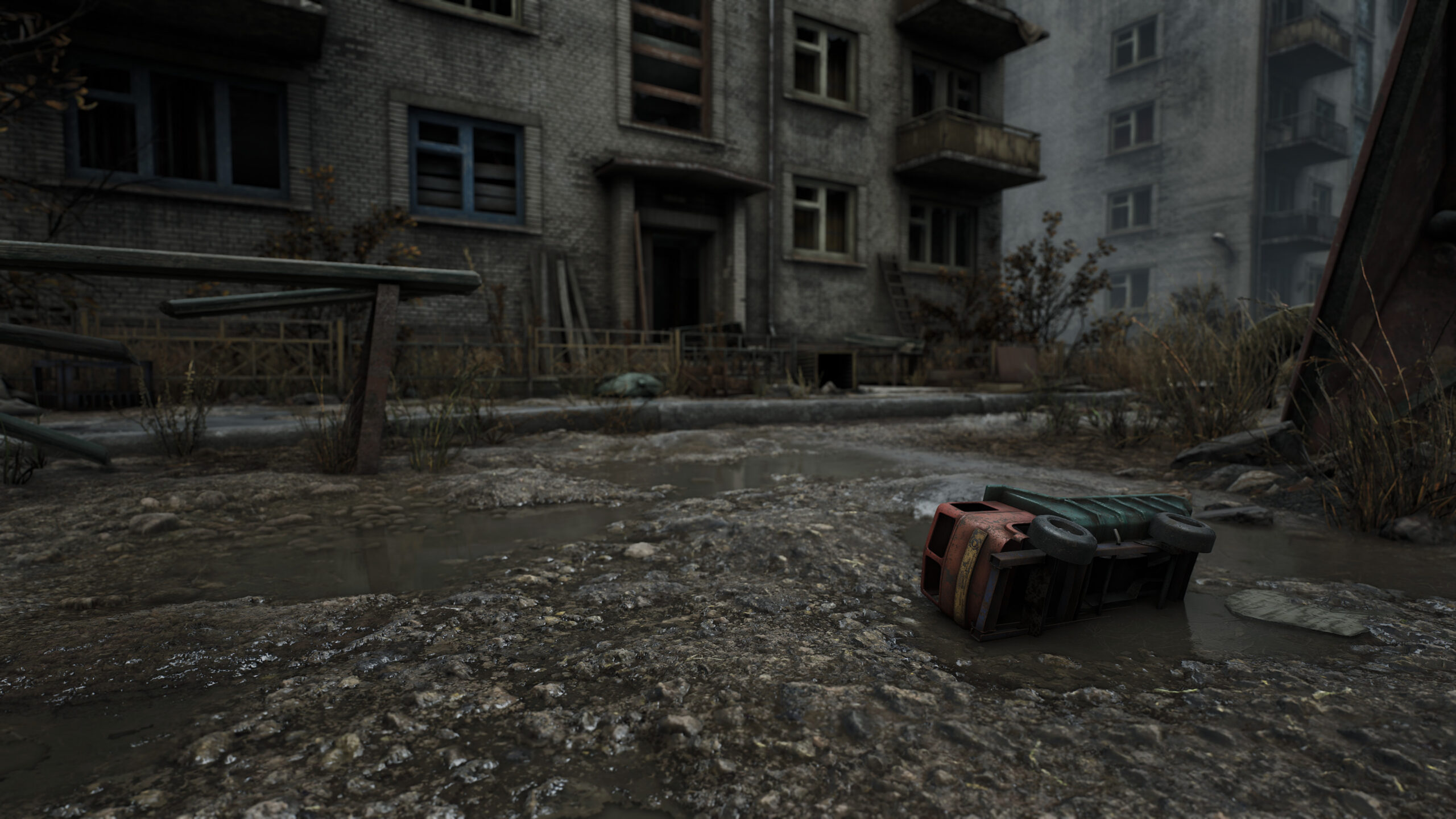
The two scenes were not identical: furnishings and surface variations changed during production, and the number of placed assets did not fall. The comparison measured the combined changes, not the contribution of any one technique or the frame rate of the packaged VR game.
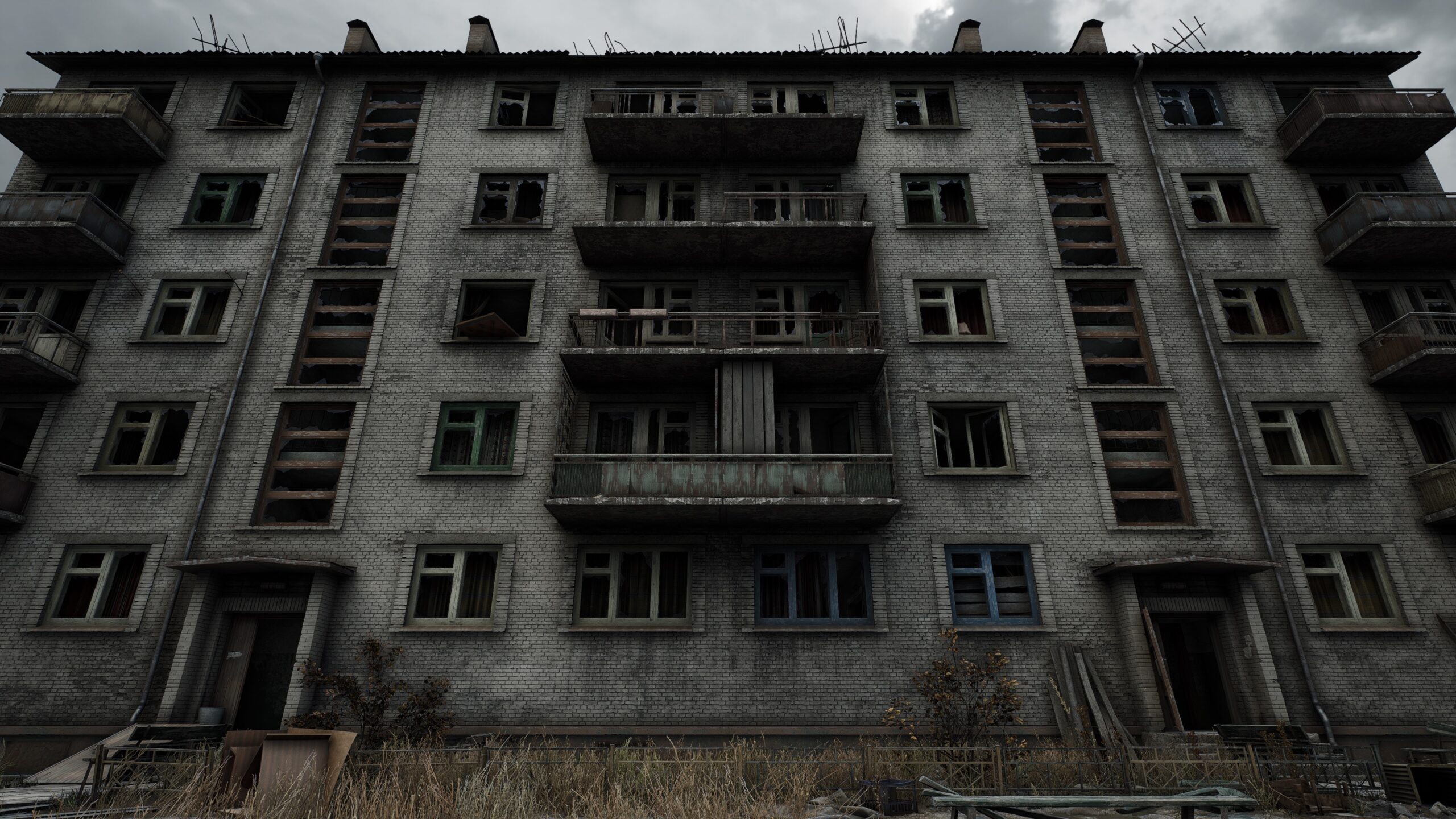
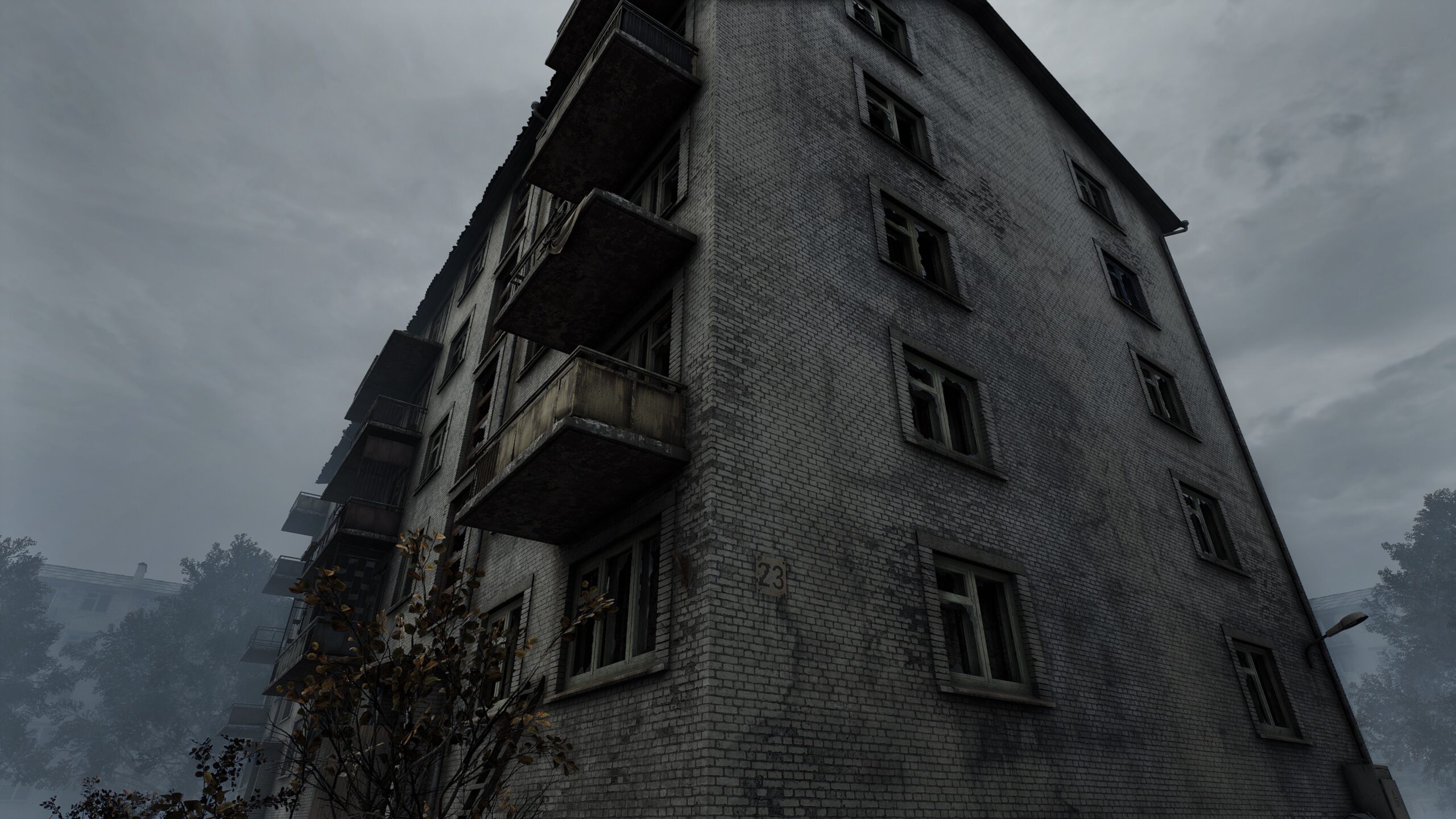
Petrushin’s portfolio presentation was separate from that test. For the showcase, he spent roughly a month arranging and lighting the original game-ready assets in Unreal Engine 5. He restored the textures to their original resolutions, replaced baked lighting with Lumen and used Nanite only for the landscape. The cold, overcast views show the production building geometry, but not the lighting setup players encounter in VR.