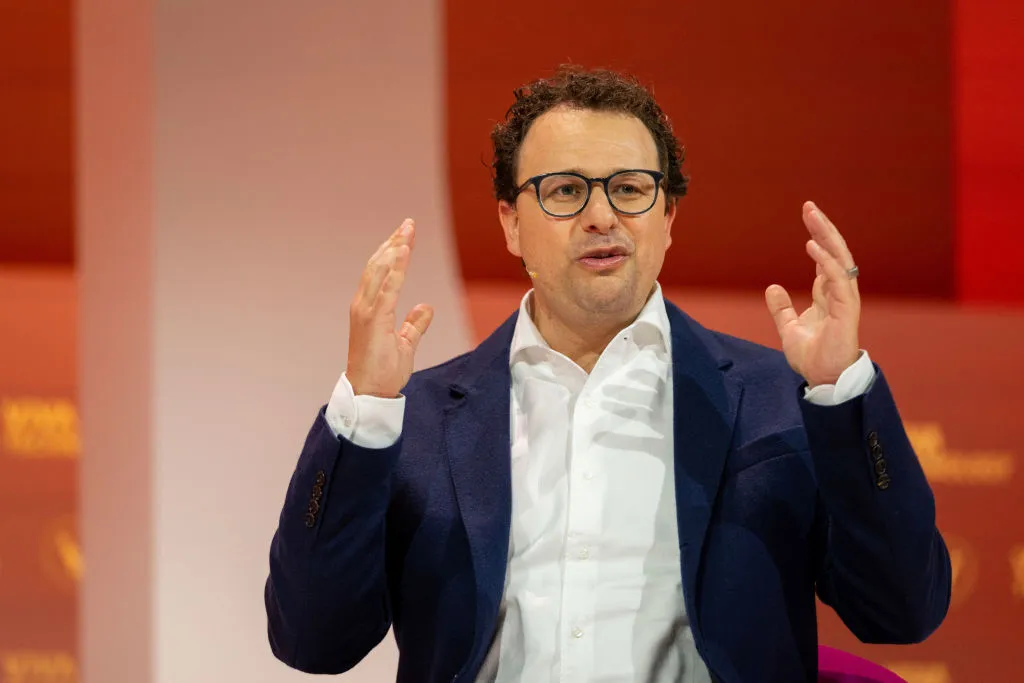
Anthropic CEO Dario Amodei called it “absurd” to suggest that his company wants people to surrender control to AI. In a November 25, 2026, post on X, he drew a distinction between letting a system perform a task, such as driving a car or writing software from start to finish, and giving it the authority to govern people.
“We should never sacrifice legitimacy or self-determination at the altar of efficiency or security,” Amodei wrote. He said his essays have consistently argued that AI should strengthen democratic institutions and that people should retain final decision-making power.
A harder question for Anthropic is how much of its own research to automate. In June, the company said Claude had written more than 80% of the code merged into its codebase. In its IPO filings, Anthropic describes each generation of Claude helping researchers develop the next, a process it calls “closing the loop.” In a November assessment, the independent AI safety nonprofit METR found that Anthropic’s models were improving at about twice their historical rate and attributed most of that acceleration to AI-assisted research.
That is not the same as recursive self-improvement, in which a system improves itself without human help. Amodei suggested that process may need limits. “As we said publicly in early November, we don’t expect it to be safe for Claude to build successive frontier models fully autonomously, without meaningful human supervision or understanding,” he wrote.
Executives at rival companies have also raised questions about who retains control as models become more capable. Earlier in November, OpenAI CEO Sam Altman said people should continue to have “agency over the future.” Meta chief AI officer Alexandr Wang made a narrower point about self-improvement: “It is hard to imagine a world where humanity can maintain control over fully unconstrained recursive self-improvement,” he wrote on X.
Amodei accused competitors of using the language of human agency for commercial and political positioning. In his view, their products show little difference in approach: each company is releasing models that can automate more tasks, and each says it offers safeguards.