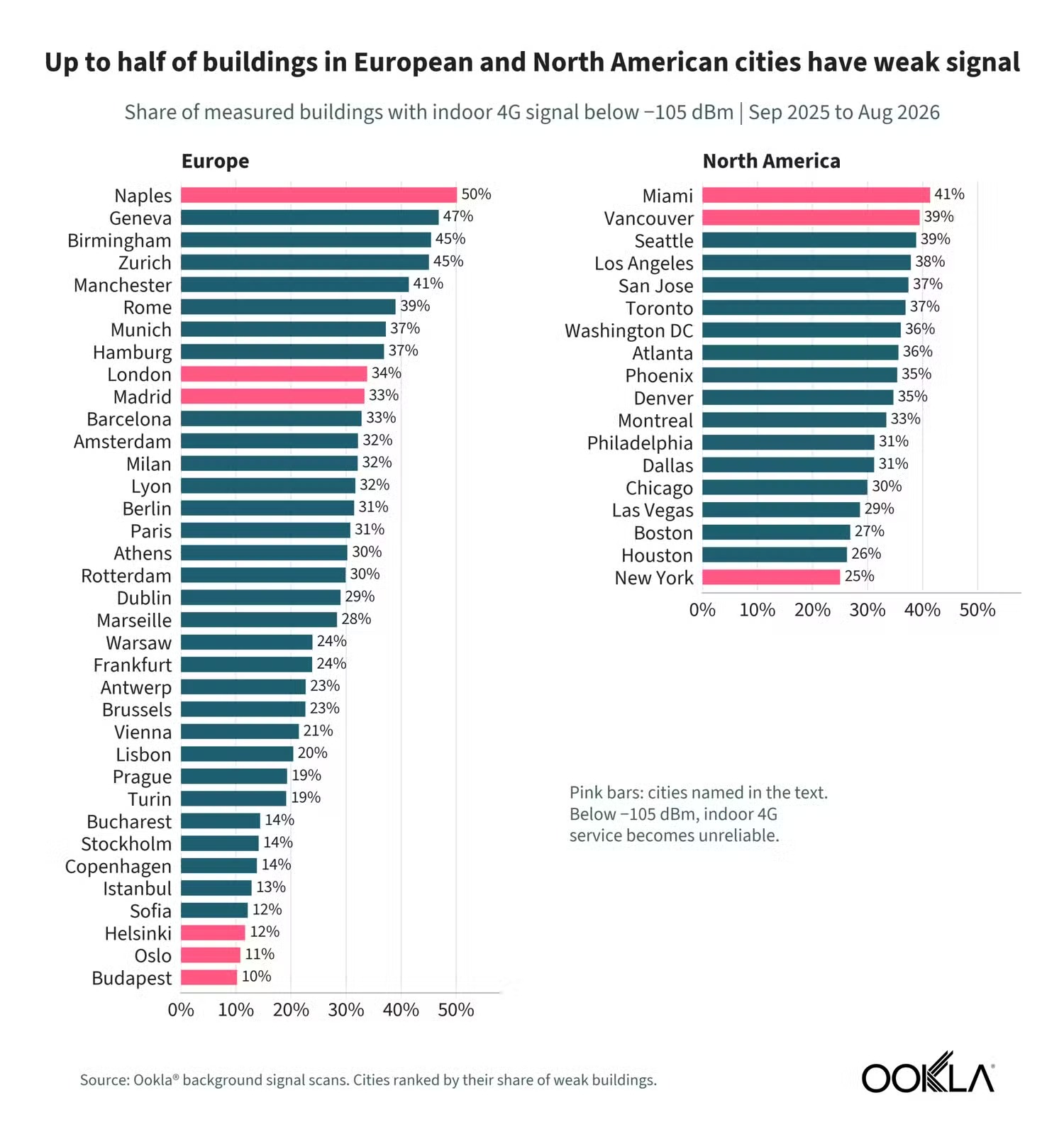
As reported on November 17, 2026, a yearlong Ookla survey of more than 100 cities in 60 countries found that several U.S. cities ranked poorly for indoor mobile signal strength. Among the North American cities surveyed, Miami performed worst, followed by Vancouver and Seattle.
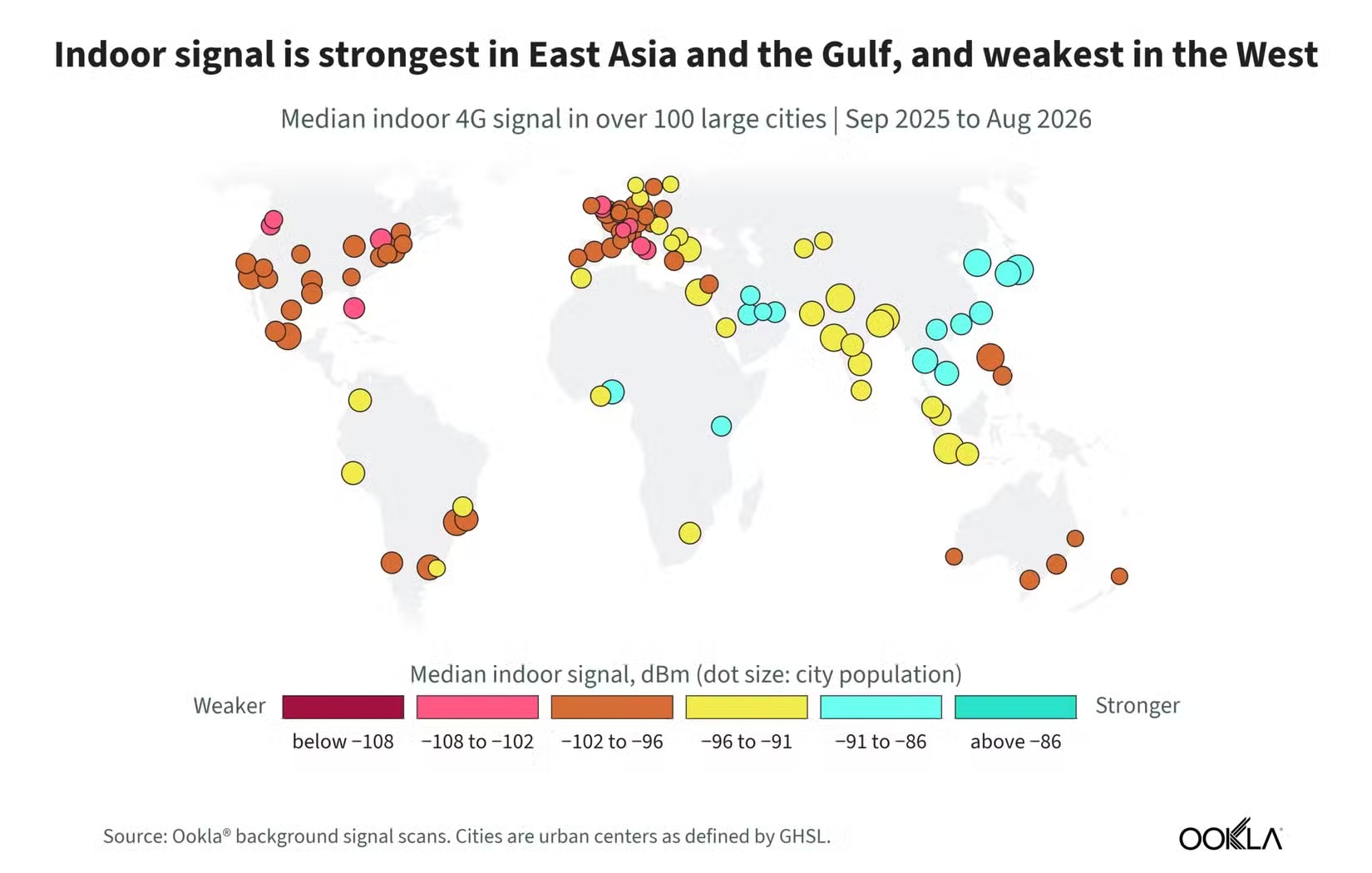
Cities in East and Southeast Asia and the Gulf region had the strongest indoor signals, while cities in Europe, North America and Oceania generally fell below the survey average. Ookla reported a 17 dBm difference in median indoor signal strength between the best- and worst-performing cities—equivalent to roughly a 50-fold difference in signal power.
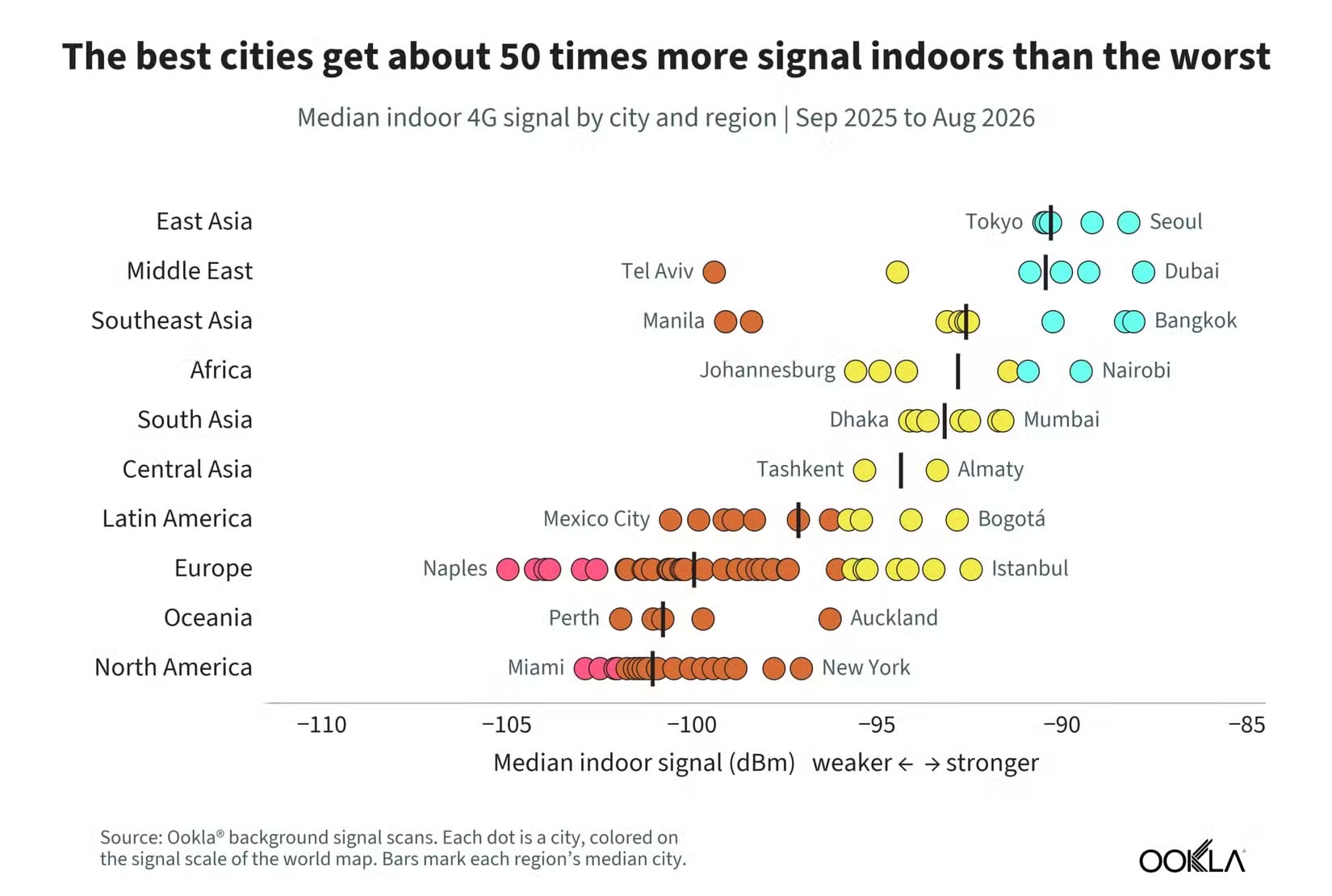
Weak indoor reception is not necessarily explained by buildings blocking unusually large amounts of signal. According to Ookla, the drop in signal strength from outdoors to indoors in North American cities was among the smallest measured globally. That suggests the outdoor signal may already be relatively weak.
Ookla also said mobile operators often estimate indoor coverage rather than measuring it extensively. Better building insulation could make indoor coverage more challenging in the future, though the survey’s findings do not establish how much any particular building upgrade would affect reception.