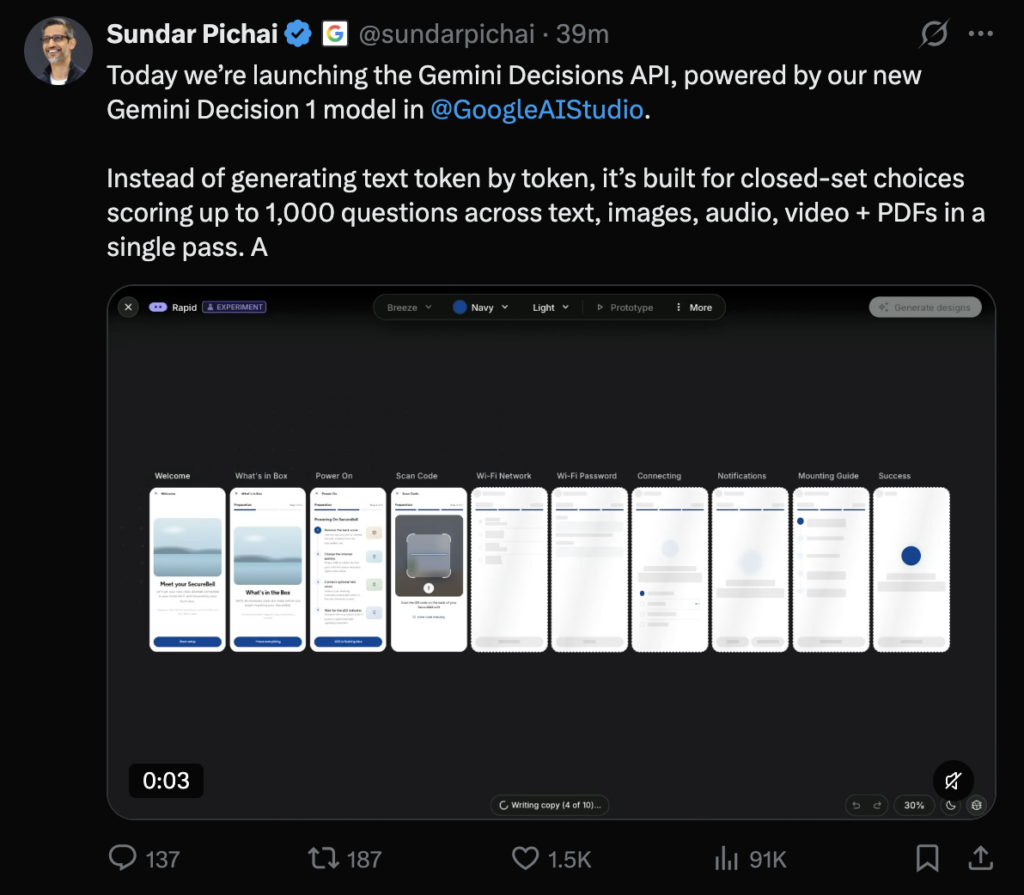
In a report published on November 12, 2026, InfoQ described Google’s introduction of Gemini Decision 1 and the Gemini Decisions API. The model is designed for tasks with predefined answers: rather than generating a response token by token, it scores candidate answers in a single forward pass.
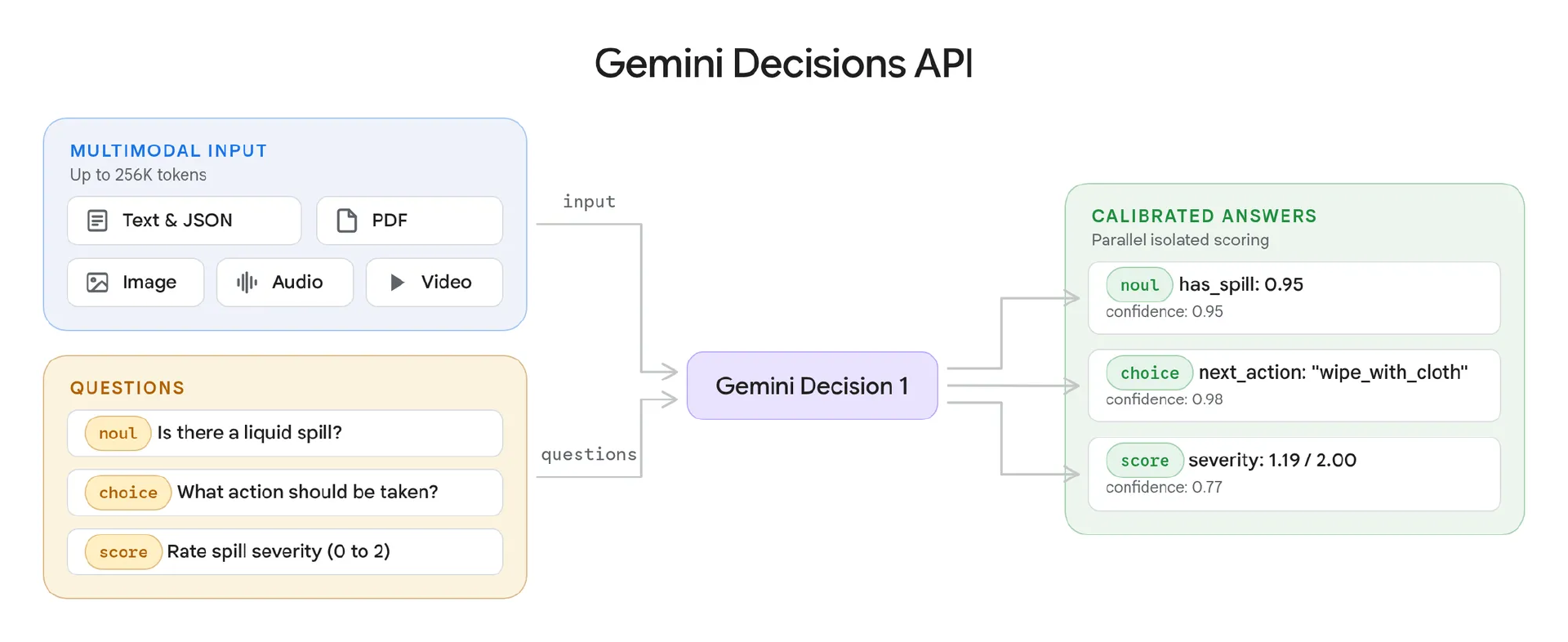
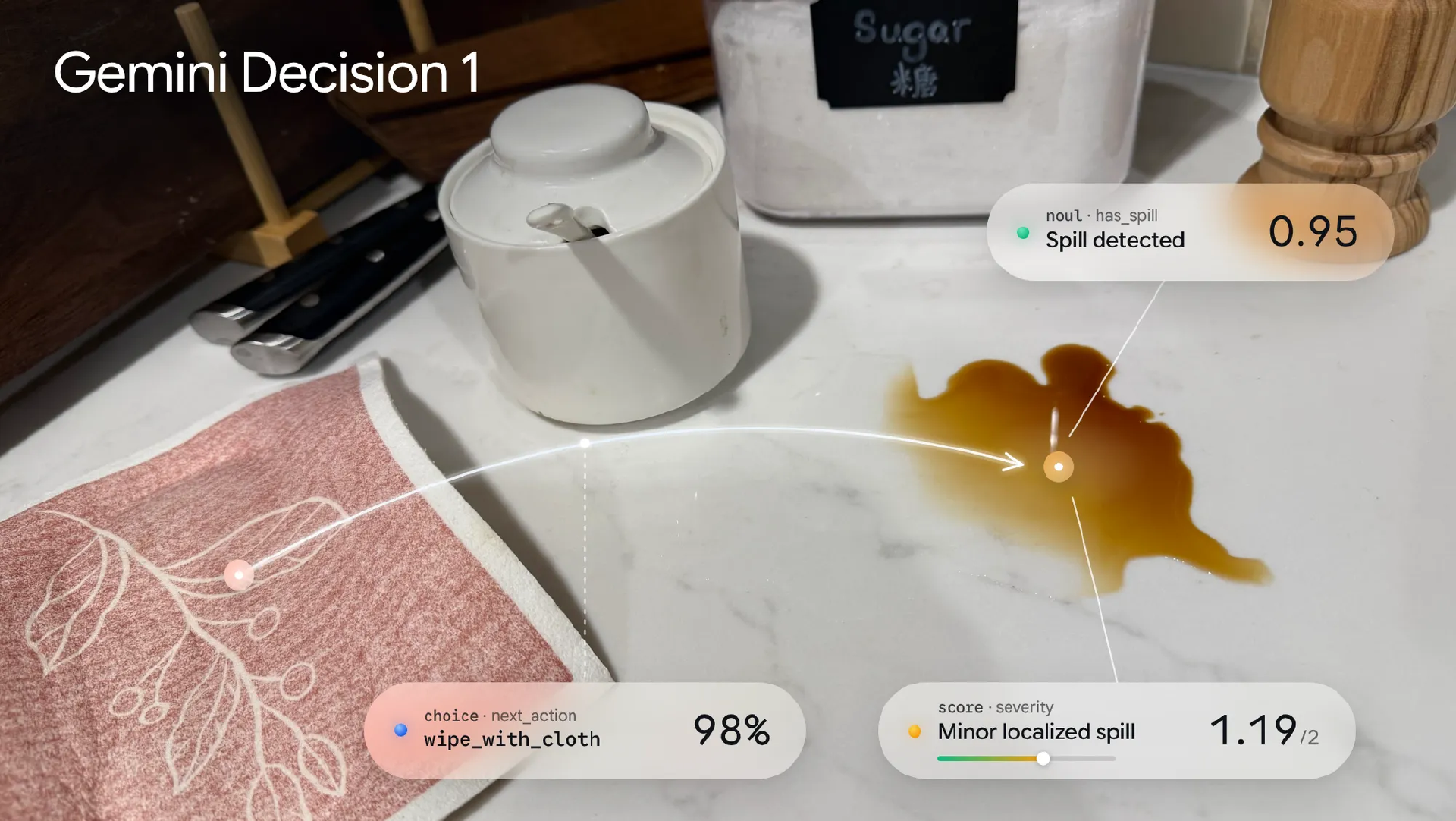
According to Google’s figures cited by InfoQ, one request can contain up to 1,000 questions across text, images, audio, video and PDFs, with an input context of up to 256K tokens. The API supports yes/no questions, multiple-choice questions with 2–255 options, and ratings against an ordered rubric. These question types can be combined in one request, and results include probabilities or confidence scores.
Google reports end-to-end latency of about 150–250 milliseconds in its tests, with a median model-compute latency of 50–100 milliseconds for contexts of up to 16K tokens. It lists a price of $0.10 per million input tokens and no output-token charge. On a shared benchmark set, Google says the API cost nearly five times less than calling Gemini 3.5 Flash-Lite through the Interactions API. Those performance and cost comparisons are Google’s reported results, not independent measurements in the InfoQ article.
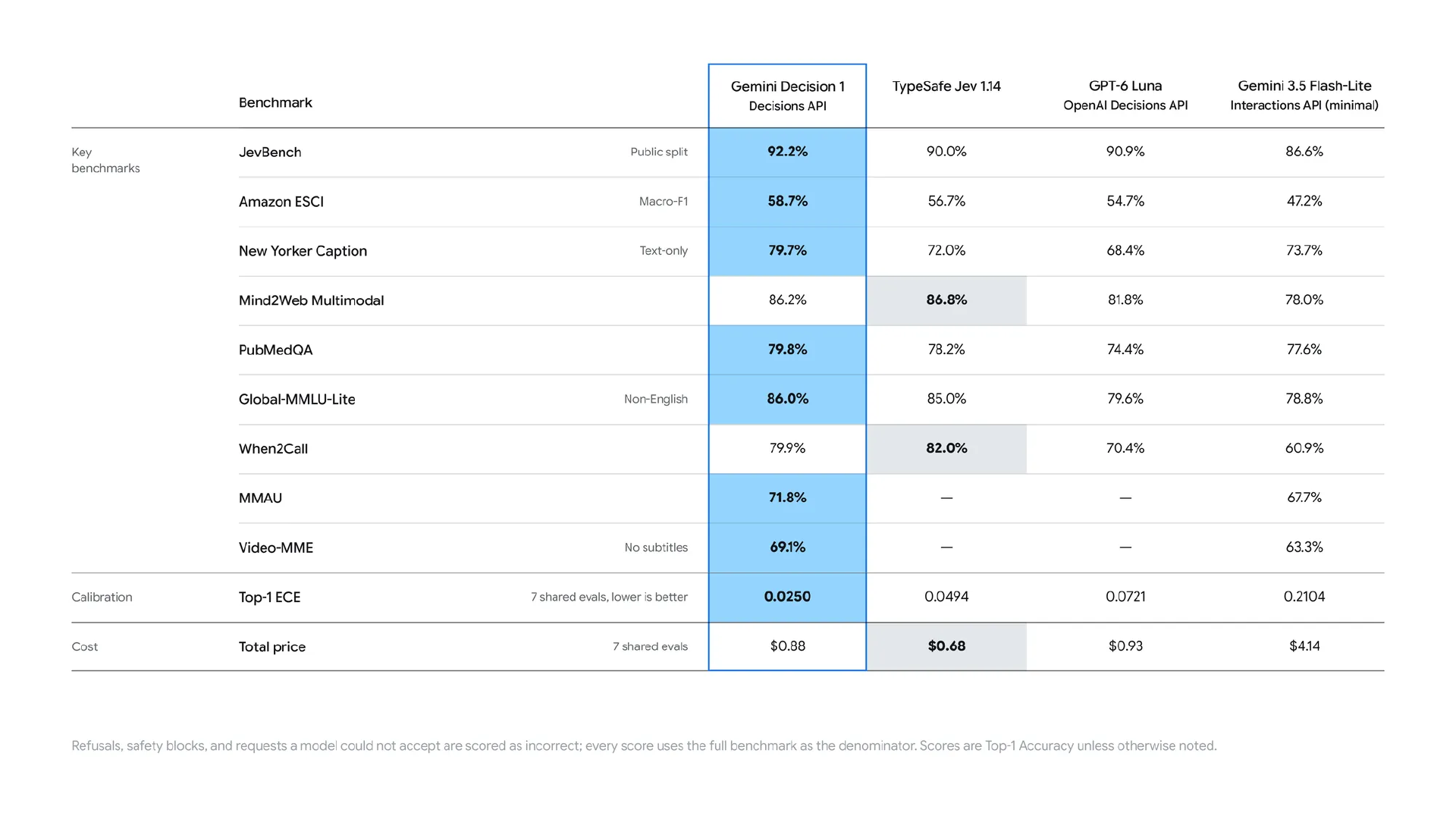
Google also says Gemini Decision 1 ranked first on seven of nine benchmarks. Its reported JevBench accuracy was 92.2%, compared with 90.9% for GPT-6 Luna, 90.0% for TypeSafe Jev 1.14 and 86.6% for Gemini 3.5 Flash-Lite. It did not lead every test: TypeSafe Jev 1.14 scored higher on Mind2Web Multimodal and When2Call. Google reported a Top-1 expected calibration error of 0.0250 for Gemini Decision 1 in its comparison.
The company says it is already using the API for model routing in Gemini Notebook, where it reports latency reductions of up to 40% for routine queries. Other uses described by InfoQ include product-flow design in Stitch, emoji selection in Google Labs’ CC, and an internal safety layer for MCP tools in Google Search. These examples illustrate the intended role of a decision model: making a bounded choice, such as which model or tool to use, while leaving open-ended work to other systems.
Source: infoq.cn (originally published 2026-11-12 11:00 UTC+8)