
A FreeBuf article published on November 9, 2026, reports observations from four consecutive days of traffic to a public-facing cross-border business. Its authors examined a self-developed web application firewall (WAF) designed to detect the meaning of attack payloads rather than match only known strings. Their central finding: the system handled many attempts to disguise an injection payload, but missed some attacks whose harmful logic emerged only after the backend combined multiple request parameters.
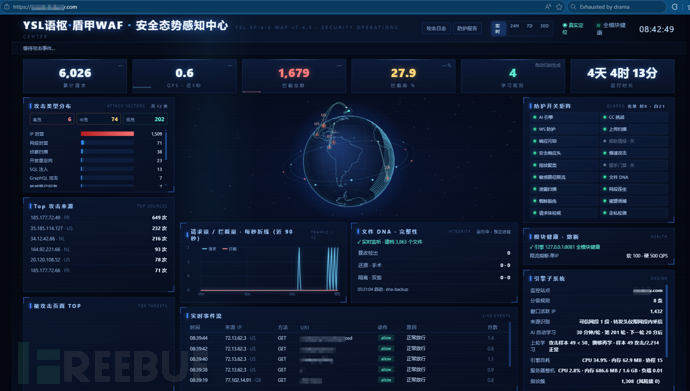
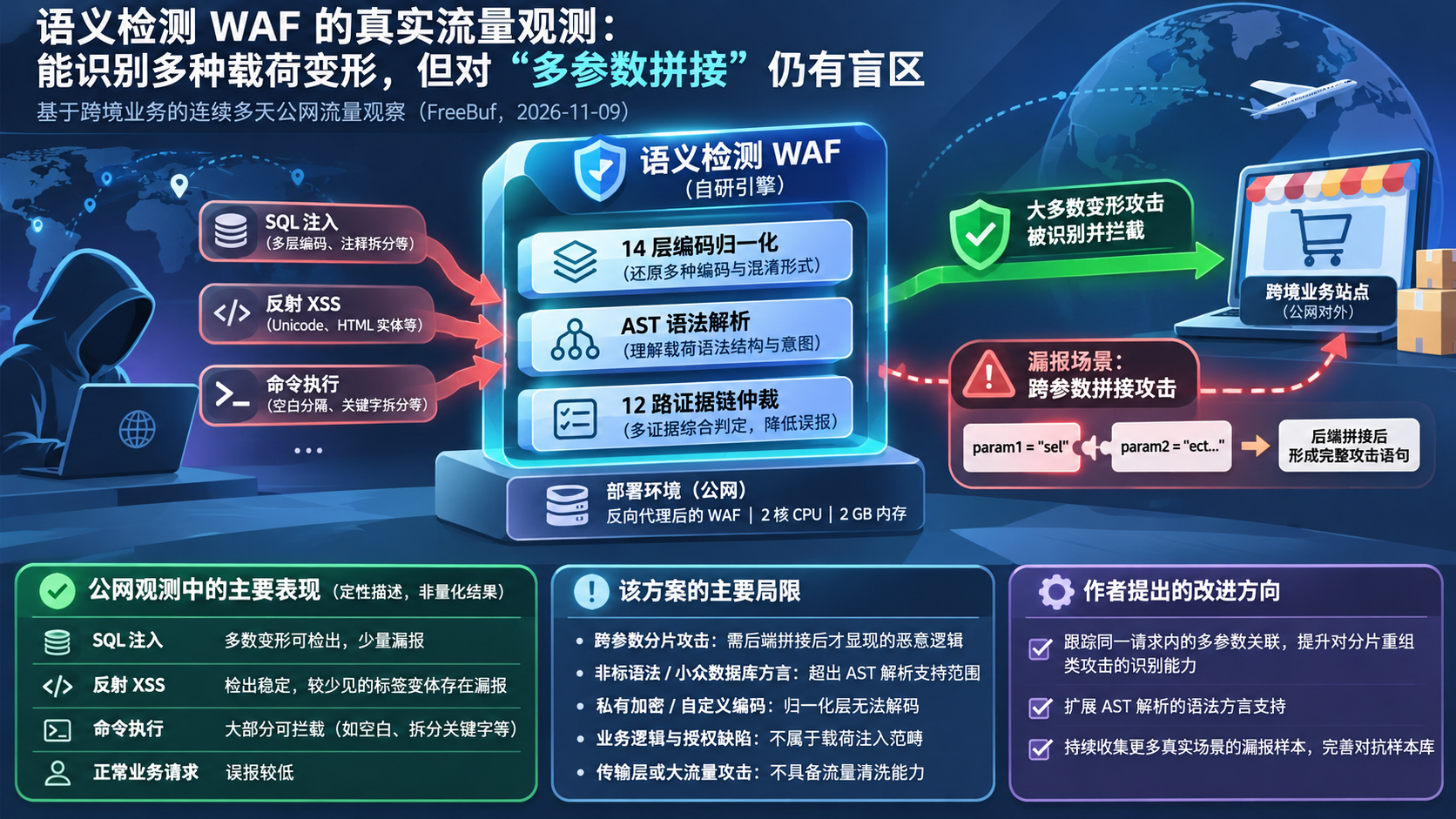
The WAF ran behind a reverse proxy on a public server with two CPU cores and 2 GB of memory. According to the article, its detection path used 14 layers of encoding normalization, abstract syntax tree (AST) parsing and arbitration across 12 independent evidence channels. The engine received no rule updates or cloud threat intelligence during the observation period. The authors distinguished automated scanning payloads, manually modified test payloads and normal business requests. They used a local test environment with the same engine version and configuration to reproduce missed samples captured in public traffic; those local tests were not counted as the main traffic dataset.
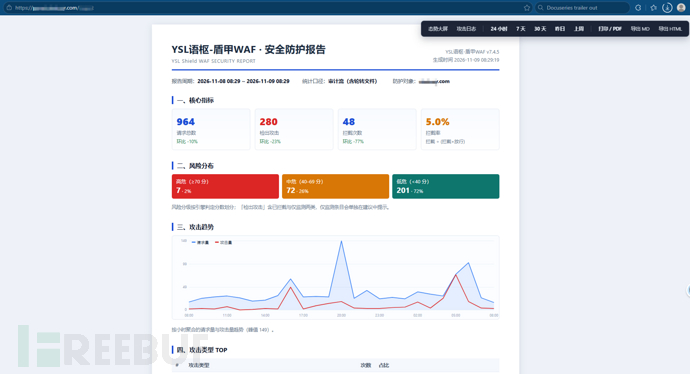
The authors report that the engine detected most observed SQL injection attempts disguised with nested URL encoding or inserted comments. They describe detection of reflected cross-site scripting attempts using Unicode and HTML entity encoding as stable, while noting misses involving less common tag variants. Most observed command-execution attempts using whitespace or split keywords were blocked. They also characterize false positives on normal visitor requests as low. The article does not provide request totals, detection rates or false-positive rates, so these descriptions cannot be treated as quantified performance results.
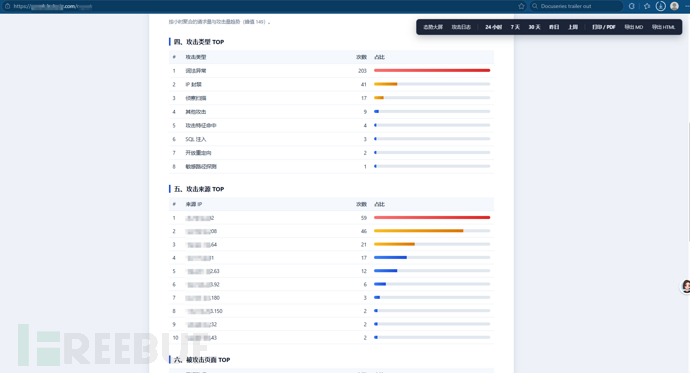
The clearest failure involved attacks split across parameters. Individually, each parameter lacked a complete malicious syntax; the attack took shape only when backend application code joined them. The authors say they reproduced these public-traffic misses locally and obtained results consistent with the live observations. They identify this as an architectural boundary: a gateway analyzing parameters separately cannot infer every way an application will combine them.
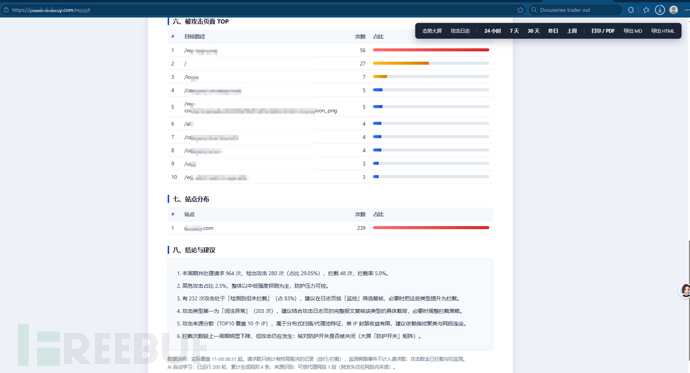
The article identifies other limits: syntax outside the AST parser’s supported dialects, private encryption or custom encodings the normalization layer cannot decode, business-logic and authorization flaws, and transport-layer or high-volume traffic attacks. The authors propose tracking relationships between parameters in the same request, expanding dialect support and collecting more real-world missed samples.

These findings are the authors’ account of one deployment, not an independently measured comparison with a signature-based WAF. They suggest that semantic parsing can help with changes to a payload’s appearance, while leaving application-specific behavior and unsupported syntax outside its reliable view.
Source: freebuf.com (originally published 2026-11-09 09:25 UTC+8)